
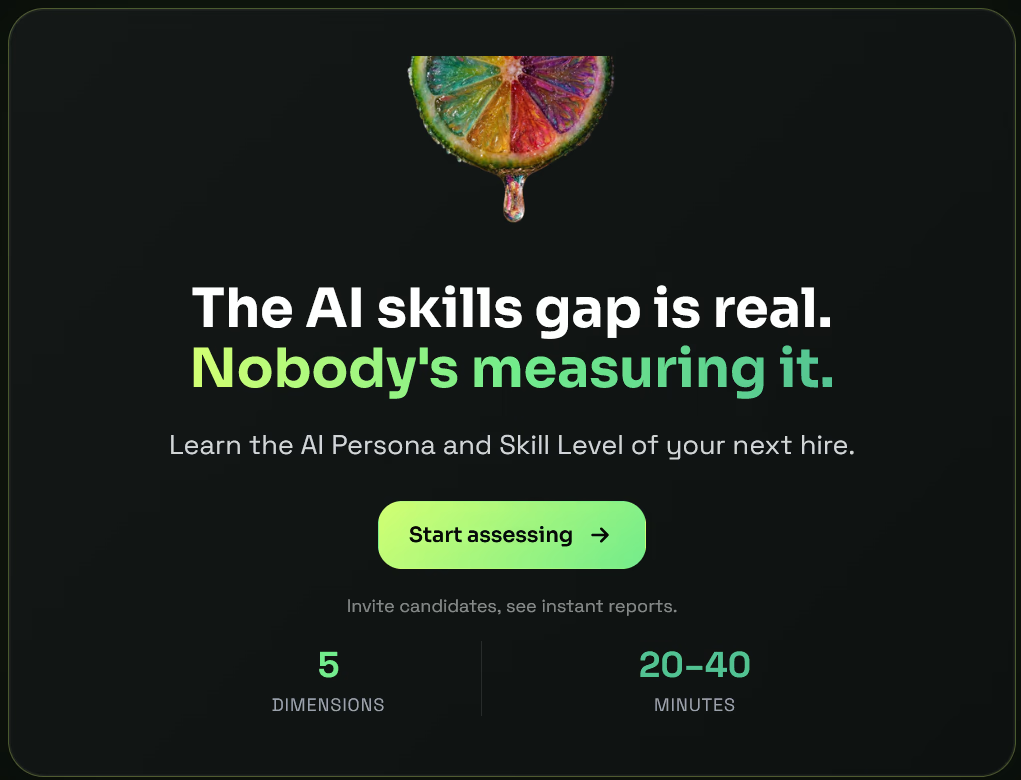
The adoption of artificial intelligence across industries has created a new kind of skills gap. While many professionals claim familiarity with AI tools, very few can demonstrate real, practical fluency. This is where AISA the world's first conversational AI skills assessment comes in. Instead of relying on outdated quizzes or self-reported knowledge, this innovative approach evaluates how individuals actually interact with AI in real-world scenarios. By using a dynamic conversation-based format, the assessment captures genuine problem-solving ability, critical thinking, and adaptability in ways traditional testing never could.
This new assessment model is redefining how AI proficiency is measured. Rather than asking multiple-choice questions, it engages users in a structured dialogue that reflects real use cases. In just about twenty minutes, users can receive a detailed, evidence-based report that highlights their strengths, weaknesses, and overall AI fluency. This shift toward conversational evaluation marks a significant milestone in the evolution of skills testing, especially in a world where AI is becoming a core competency across nearly every profession.
AISA.to - What Is a Conversational AI Skills Assessment?
A conversational AI skills assessment is a modern evaluation method that uses interactive dialogue to measure a person's ability to work with artificial intelligence tools. Unlike traditional exams, which often focus on theoretical knowledge, this approach emphasizes practical application. Users engage in a guided conversation that simulates real tasks, allowing the system to assess how they think, respond, and utilize AI in context.
This type of assessment is grounded in behavioral science and psychometrics. It analyzes responses across multiple dimensions, such as problem-solving, prompt design, reasoning, and adaptability. By focusing on how users arrive at answers rather than just the answers themselves, it provides a much deeper understanding of true capability. This makes it especially valuable for employers, educators, and professionals looking to validate their AI skills in a meaningful way.
Why Traditional AI Skill Tests Fall Short
Traditional assessments often rely on static questions that fail to capture the complexity of working with AI. These tests may measure familiarity with terminology or basic concepts, but they rarely reflect how AI is used in real scenarios. As a result, they can create a false sense of competence and fail to identify critical skill gaps.
Another limitation is the lack of personalization. Standard tests treat every user the same, regardless of their background or experience level. This one-size-fits-all approach does not account for the diverse ways people interact with AI tools. In contrast, a conversational assessment adapts in real time, tailoring questions and challenges based on user responses. This creates a more accurate and engaging evaluation experience.
Additionally, traditional tests often lack credibility in professional settings. Without clear evidence or context, it can be difficult for employers to trust the results. Conversational assessments address this issue by generating detailed reports that showcase how scores are derived, providing transparency and validation.
https://aisa.to
https://aisa.to/employer
How the Conversational Assessment Works
The process begins with a simple interaction. Users start a chat-based session where they are guided through a series of prompts and tasks. These prompts are designed to mimic real-world AI applications, such as generating content, analyzing information, or solving complex problems.
As the conversation progresses, the system evaluates responses across multiple criteria. It looks at how effectively users structure prompts, interpret outputs, and refine their approach. The assessment is not just about getting the right answer but about demonstrating a clear and logical process.
Once the session is complete, users receive a comprehensive report. This report includes a score based on evidence gathered during the interaction, along with detailed insights into performance. It also provides a personalized growth plan, helping users understand how to improve their skills over time.
- Interactive chat-based evaluation
- Real-world AI task simulation
- Multi-dimensional scoring system
- Personalized feedback and improvement plan
- Verified credential for professional use
Key Benefits of Using a Conversational AI Assessment
One of the most significant advantages of this approach is its authenticity. Because it mirrors real-world usage, it provides a more accurate representation of a person's capabilities. This is particularly important in hiring scenarios, where employers need reliable data to make informed decisions.
Another benefit is the personalized learning experience. The assessment does not just evaluate skills; it also guides users toward improvement. By identifying specific gaps and providing actionable recommendations, it turns evaluation into a continuous learning journey.
The ability to share a verified credential is also a major advantage. Users receive a public, verifiable report that can be shared with employers or on professional platforms. This adds credibility and helps individuals stand out in a competitive job market.
Finally, the conversational format makes the process more engaging. Instead of feeling like a test, it feels like a natural interaction. This reduces anxiety and encourages users to perform at their best.
Who Should Use This Type of Assessment?
This innovative assessment is designed for a wide range of users. Professionals looking to validate their AI skills can benefit from the detailed insights and certification. Job seekers can use it to demonstrate their capabilities to potential employers, while companies can use it to assess and upskill their teams.
Educators and students can also find value in this approach. As AI becomes an integral part of modern education, having a reliable way to measure proficiency is essential. This assessment provides a practical and scalable solution for academic environments.
Even experienced professionals can benefit from the personalized growth plan. AI is constantly evolving, and staying up to date requires continuous learning. This assessment helps users identify areas for improvement and stay ahead of the curve.
- Job seekers aiming to prove AI proficiency
- Employers assessing candidate skills
- Teams looking to improve AI fluency
- Students and educators integrating AI into learning
- Professionals seeking continuous development
The Role of Behavioral Science in AI Assessment
One of the unique aspects of this assessment is its foundation in behavioral science. By understanding how people think and make decisions, the system can evaluate not just what users know but how they apply that knowledge. This approach provides a more holistic view of skill and competence.
Behavioral science also helps ensure fairness and validity. By using established psychometric principles, the assessment is designed to be both reliable and unbiased. This is crucial in professional settings, where decisions based on assessment results can have significant consequences.
The integration of behavioral insights also enhances the user experience. By adapting to individual responses, the system creates a more personalized and engaging interaction. This not only improves accuracy but also makes the assessment more enjoyable.
How This Assessment Transforms Hiring
Hiring in the age of AI requires new tools and approaches. Traditional resumes and interviews often fail to capture a candidate's true capabilities, especially when it comes to emerging technologies. A conversational AI skills assessment provides a more objective and data-driven solution.
Employers can use the detailed reports to understand how candidates think, solve problems, and interact with AI tools. This goes beyond surface-level knowledge and provides deeper insights into potential performance. As a result, companies can make more informed hiring decisions and reduce the risk of costly mistakes.
Additionally, this approach helps standardize the evaluation process. By using a consistent framework, employers can compare candidates more effectively and ensure fairness. This is particularly important in large-scale recruitment efforts.
The Future of Skills Validation in the AI Era
The introduction of conversational AI assessments signals a broader shift in how skills are validated. As technology continues to evolve, traditional methods will become increasingly obsolete. Interactive, data-driven approaches will take their place, offering more accurate and meaningful insights.
This trend is not limited to AI. Similar methods are likely to emerge in other fields, transforming how skills are measured across industries. The focus will shift from static knowledge to dynamic capability, reflecting the realities of modern work.
For individuals and organizations alike, adapting to this change is essential. Embracing new assessment methods can unlock opportunities for growth, innovation, and success in an increasingly competitive landscape.
Conclusion
The world's first conversational AI skills assessment represents a major breakthrough in how we evaluate and develop AI proficiency. By focusing on real-world application and interactive dialogue, it provides a more accurate, engaging, and meaningful assessment experience. Whether you are a professional looking to prove your skills, an employer seeking better hiring tools, or a learner aiming to improve, this approach offers a powerful solution.
As AI continues to reshape the way we work and learn, having a reliable way to measure skills will become increasingly important. Conversational assessments are not just a trend; they are the future of skills validation. By adopting this innovative approach, individuals and organizations can stay ahead of the curve and thrive in the AI-driven world.
Ozan,
Founder
https://aisa.to