
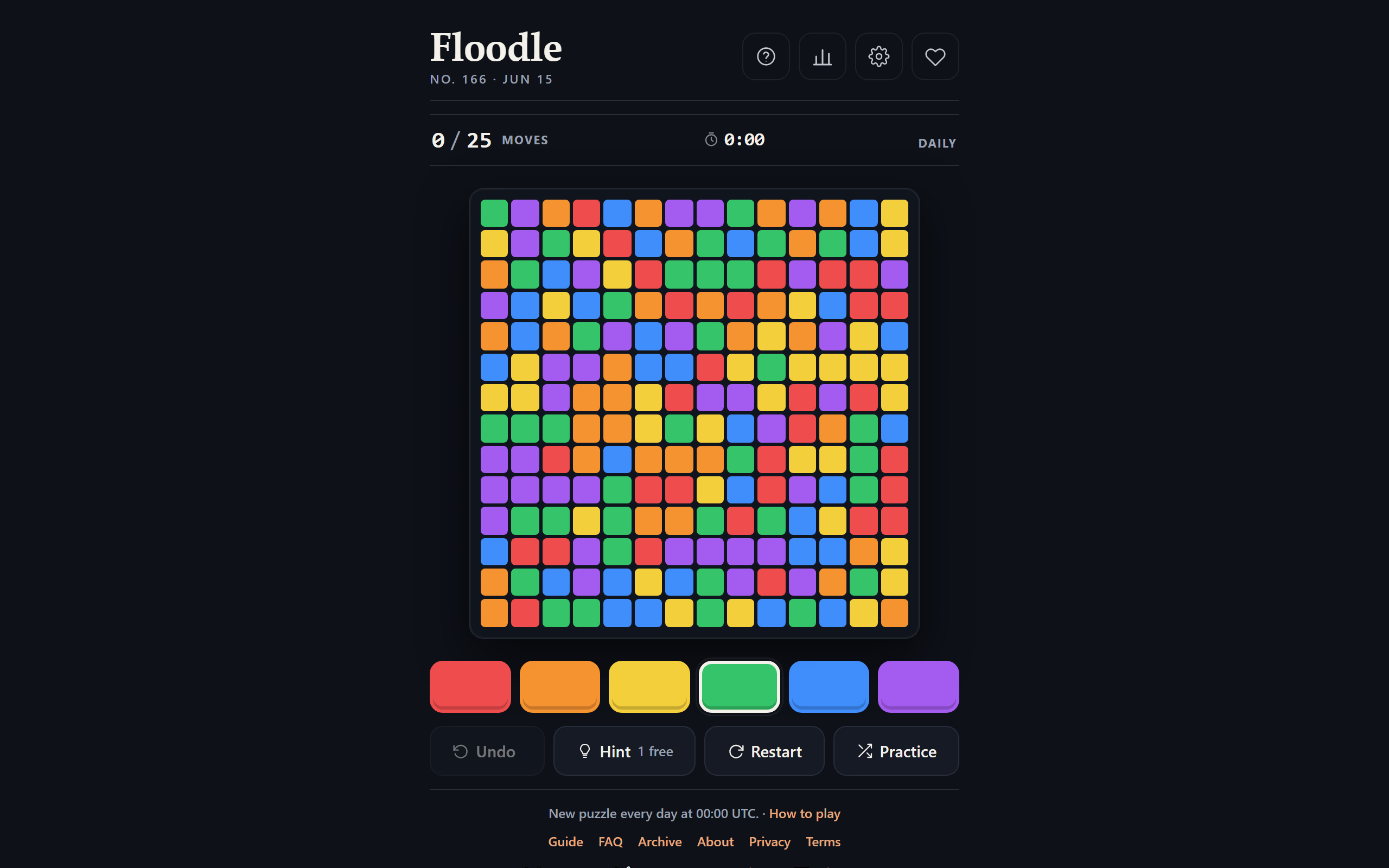
Flood It puzzles look effortless at a glance, yet clearing one in the fewest possible moves is a completely different challenge. The rules fit into a single sentence, but the decisions underneath hide real depth, and that gap is exactly why the game stays interesting day after day. If you play Floodle, the daily Flood It puzzle, you already know the small thrill of finishing the board with a move or two to spare. This guide breaks down how to solve a Flood It puzzle in fewer moves, starting from the mechanics beneath the grid and moving toward the read-ahead habits that separate a lucky finish from a repeatable one. By the end you will have a clear method you can apply to today's board and to every board that follows.
What Fewer Moves Really Means in Flood It
Every Flood It board carries a target number of moves called par, and matching or beating that number is the true measure of skill. On Floodle, par is not a rough guess, because a solver computes a fair target for each daily board and screens it into a consistent difficulty range, which keeps every puzzle solvable within par and never impossible. That design matters, since it turns the idea of fewer moves into a concrete goal rather than a vague ambition. When you finish under par you keep your streak alive, and that streak is what pulls most players back the next day. Learning to solve a Flood It puzzle in fewer moves is therefore not only satisfying, it is the core loop of the entire game.
How a Flood It Puzzle Actually Works
Understanding the mechanics is the first step toward trimming moves, because you cannot optimize something you do not fully see. The flood always begins in the top-left corner, and that corner cell defines your starting region. Each time you choose a color, every cell connected to your region that matches the new color joins the flood, and the region grows outward. Two cells count as connected only when they sit directly beside each other and share a color, which means diagonal neighbors never link. Your task is to keep selecting colors until the whole grid becomes one single color, and the fewer choices that takes, the stronger your result. Floodle uses six colors, and you can pick them by tapping a button or pressing the number keys one through six.
Think in Regions, Not Colors
Most beginners focus on individual colors, but stronger players think in regions and how those regions merge. A region is any block of same-colored cells already touching your flood, and your aim each turn is to absorb the largest and most useful regions rather than the color that simply looks dominant. The difference is subtle yet important, because a color that covers a large share of the board does nothing for you if very little of it actually touches your current flood. Before each move, trace the border of your region and ask which color pulls in the most new cells while also setting up the next merge. This habit of planning both the current capture and the one after it is the single biggest leap toward solving a Flood It puzzle in fewer moves.
Why the Obvious Move Is Not Always the Best
There is a well-known shortcut called the greedy approach, where you always pick the color that captures the most cells right now. It is a reasonable default, and it clears many boards, but it rarely produces the shortest solution, because Flood It is a genuinely hard problem where the best path sometimes needs a smaller capture now to unlock a much larger one next. Picture two choices, where one color grabs eight cells immediately while another grabs five but lines up a long chain that captures fifteen on the following turn. The greedy choice takes the eight, yet the patient choice clears far more across two turns and saves you a move later. Training yourself to spot these setups is how you move from finishing at par to finishing comfortably under it.
Step-by-Step: How to Solve a Flood It Puzzle in Fewer Moves
A repeatable method beats guessing, so here is a simple sequence you can run on any board:
- Scan the entire grid first and note where the large single-color clusters sit, especially near the corners and edges.
- Identify which colors currently touch your top-left flood and roughly how many cells each one would capture.
- Look one move ahead and check whether a smaller capture now opens a bigger capture on the next turn.
- Choose the color that gives the best two-move outcome, not just the biggest single-turn grab.
- Repeat the read after every move, since each capture reshapes the border and changes the best choice.
- As the board narrows, mop up the remaining colors in the order that finishes in the fewest turns.
Reading the Board Before Your First Move
The opening move sets the tone, and a careful first read often saves two or three moves later on. Look at the three corners opposite your starting point, because long connected runs along the edges are easy to absorb and help the flood spread quickly. Pay attention to colors that form bridges between separate clusters, since capturing a bridge can merge two large regions in a single turn. It also helps to notice colors that appear only in small, scattered amounts, because you usually want to clean those up late rather than spend an early move on them. A board that looks chaotic becomes far more manageable once you map these features before touching a single color.
Common Mistakes That Waste Moves
Even experienced players leak moves through a handful of repeat habits, and naming them makes them easier to drop:
- Chasing the most common color on the board instead of the color that touches your flood right now.
- Always playing the greedy single-turn capture and ignoring the bigger two-move setups.
- Switching colors so often that you fragment progress instead of building one steadily growing region.
- Ignoring the edges and corners, where long runs offer some of the cheapest captures available.
- Forgetting to re-read the board after each move, which means acting on a layout that no longer exists.
Using Floodle's Tools to Improve
Floodle includes several features that quietly double as training aids for solving in fewer moves. The Practice mode gives you unlimited fresh boards that do not affect your daily streak, which makes it the ideal place to test risky look-ahead ideas without any pressure. The Undo button takes back your last move, with the first three undos free, so you can experiment, see the result, and step back to try a cleaner line. A Hint is available when you are genuinely stuck, and studying why the suggested move works teaches you to recognize similar patterns on future boards. The Daily Archive lets you replay past days purely for fun, which gives you an endless library of boards to practice on without spending your real attempts. Together these tools turn casual play into deliberate practice.
Practice Routines That Build Real Skill
Improvement comes from focused repetition rather than grinding random games, so a little structure goes a long way. Spend a few practice rounds doing nothing but two-move planning, where you commit to reading one turn ahead on every single move. On other rounds, deliberately avoid the greedy choice whenever a setup exists, even if it occasionally costs you, because the goal is to train pattern recognition rather than win every board. Replay a handful of archive puzzles and try to beat your own move count on a second attempt, which forces you to find the more efficient line. Across a week or two this kind of practice quietly rewires how you read a grid, and beating par on the daily starts to feel routine.
How Many Moves Should It Take to Solve a Flood It Puzzle?
There is no single universal number, because the move count depends on the board size, the count of colors, and how the cells are arranged. What matters more is the par set for each puzzle, since that target already accounts for the specific board in front of you. On Floodle, every daily board is screened to be solvable within its computed par, so a strong goal is simply to match or beat that figure. As your reading sharpens, you will notice that many boards can be cleared a move or two under par, and those small wins are exactly what protect your streak over time.
Is There a Perfect Strategy to Solve Flood It Every Time?
No method guarantees the shortest possible solution on every board, because finding the true optimal path is a computationally hard problem even for computers. The greedy approach is a solid baseline, and adding consistent two-move look-ahead gets you close to optimal on most real puzzles. The practical takeaway is that you do not need perfection to win, you only need to beat par, and the strategies in this guide are more than enough to do that regularly. Treat each board as a fresh read, stay patient with your setups, and the fewer-moves mindset gradually becomes second nature.
Bringing It All Together
Solving a Flood It puzzle in fewer moves is less about raw speed and more about seeing the board clearly and planning one step ahead. Once you think in regions, resist the pull of the greedy grab, and re-read the grid after every move, your move counts begin dropping on their own. Floodle gives you the ideal place to build these habits, with a fair daily par to chase, a forgiving practice mode, and an archive full of boards to sharpen on. Open today's puzzle, run the method one move at a time, and see how far under par you can finish. The streak you keep will be the clearest proof that the strategy works.