
How to Automate Your Entire Social Media Marketing Workflow with AI
Artificial intelligence has made content creation dramatically faster. A social media post can be written in seconds. Images can be generated from a prompt. Videos can be created without a traditional production team.
But for many businesses, the biggest problem is no longer creating a single piece of content.
The real problem is everything around it.
Marketing teams still move between tools for planning campaigns, writing posts, generating visuals, adapting content for different platforms, managing approvals, scheduling posts and analyzing results.
This is where AI marketing automation becomes much more interesting than simple AI content generation.
What Is AI Marketing Automation?
AI marketing automation combines artificial intelligence with marketing workflows so that more than one isolated task can be handled automatically.
Instead of asking an AI tool to write one Instagram caption, a more advanced workflow might start with a business goal such as:
“Promote our new product across Instagram, TikTok and LinkedIn next week.”
An AI-driven workflow can then help turn that goal into several connected steps:
- define the campaign direction
- create platform-specific posts
- generate or prepare images and videos
- adapt content for each channel
- organize the publishing schedule
- prepare posts for approval
- publish or schedule approved content
- analyze the results
The important difference is coordination.
Generating content is useful. Coordinating the entire workflow is where automation can save much more time.
Why Social Media Marketing Is Still Fragmented
Most businesses already use several marketing tools.
A typical workflow might involve one tool for AI writing, another for images, another for video, a spreadsheet for planning, cloud storage for assets and a social media management platform for publishing.
Each individual tool may work well.
The problem appears between the tools.
Someone still needs to copy text, download images, resize creatives, move files, remember which version belongs to which channel, check brand consistency, collect approvals and schedule everything.
As the number of channels grows, this manual coordination grows too.
Instagram may need one format.
TikTok may need another.
LinkedIn requires a different writing style.
Pinterest uses different visual dimensions.
YouTube may require video, thumbnails and descriptions.
This is why the next stage of AI marketing is moving from isolated generators toward connected AI marketing agents and workflows.
Start With a Marketing Goal, Not a Prompt
One of the most useful changes in AI marketing automation is moving from individual prompts to goal-based workflows.
Traditional AI usage looks like this:
“Write an Instagram post about our new product.”
Then the user manually creates another prompt for TikTok.
Then another for LinkedIn.
Then they generate an image.
Then they create a video.
Then they move everything into a scheduler.
A goal-based workflow starts differently.
For example:
“Create a one-week campaign for our new product for Instagram, TikTok and LinkedIn.”
The system can use that goal as shared context for the entire campaign.
That makes it easier to maintain consistency between the message, creative assets and individual platform versions.
Step 1: Campaign Planning
Automation should begin before content generation.
The AI needs to understand:
- what is being promoted
- who the target audience is
- which channels should be used
- what the campaign should achieve
- what brand guidelines should be followed
- how frequently content should be published
This planning stage creates the structure for everything that follows.
Without shared campaign context, AI-generated content can easily become inconsistent.
Step 2: Channel-Specific Content Creation
A common mistake is creating one post and copying it everywhere.
Every social network works differently.
AI marketing automation should adapt the content rather than simply duplicate it.
That can include differences in:
- post length
- tone
- hooks
- calls to action
- hashtags
- visual formats
- video length
- publishing times
The campaign idea can remain consistent while the execution changes for each platform.
Step 3: Generate Images and Videos
Modern AI workflows can also connect text generation with creative production.
Instead of creating a campaign and then manually switching to another application, the workflow can prepare the visual requirements together with the content.
For example, a campaign may need:
- a vertical video for TikTok
- a social image for Instagram
- a professional visual for LinkedIn
- a thumbnail for YouTube
The goal is not simply generating more media.
The goal is generating the right media for the right channel.
Step 4: Keep Brand Context Connected
AI becomes much more useful when it understands the business behind the campaign.
Brand context may include:
- company information
- products and services
- tone of voice
- brand colors
- logos
- target audiences
- previous campaigns
- preferred calls to action
Without this context, every AI request starts almost from zero.
With shared brand knowledge, future campaigns can become more consistent and require less manual explanation.
Step 5: Keep Human Approval in the Workflow
Automation does not have to mean giving AI unlimited publishing control.
For many businesses, the best model is:
AI prepares the work.
A human approves what matters.
Then the approved content moves toward publishing.
This is particularly important for brand communication, regulated industries, pricing information or campaigns where incorrect information could create problems.
Human approval can therefore be part of the automation rather than an obstacle to it.
Step 6: Schedule and Publish Across Channels
Once content and creatives are ready, the workflow should not stop.
Publishing is often one of the most repetitive parts of social media marketing.
A connected system can prepare approved content for the correct platforms and publishing dates without forcing users to rebuild the campaign inside another tool.
This is where AI marketing automation begins to feel less like a content generator and more like an operating system for marketing.
From Content Generator to AI Marketing Agent
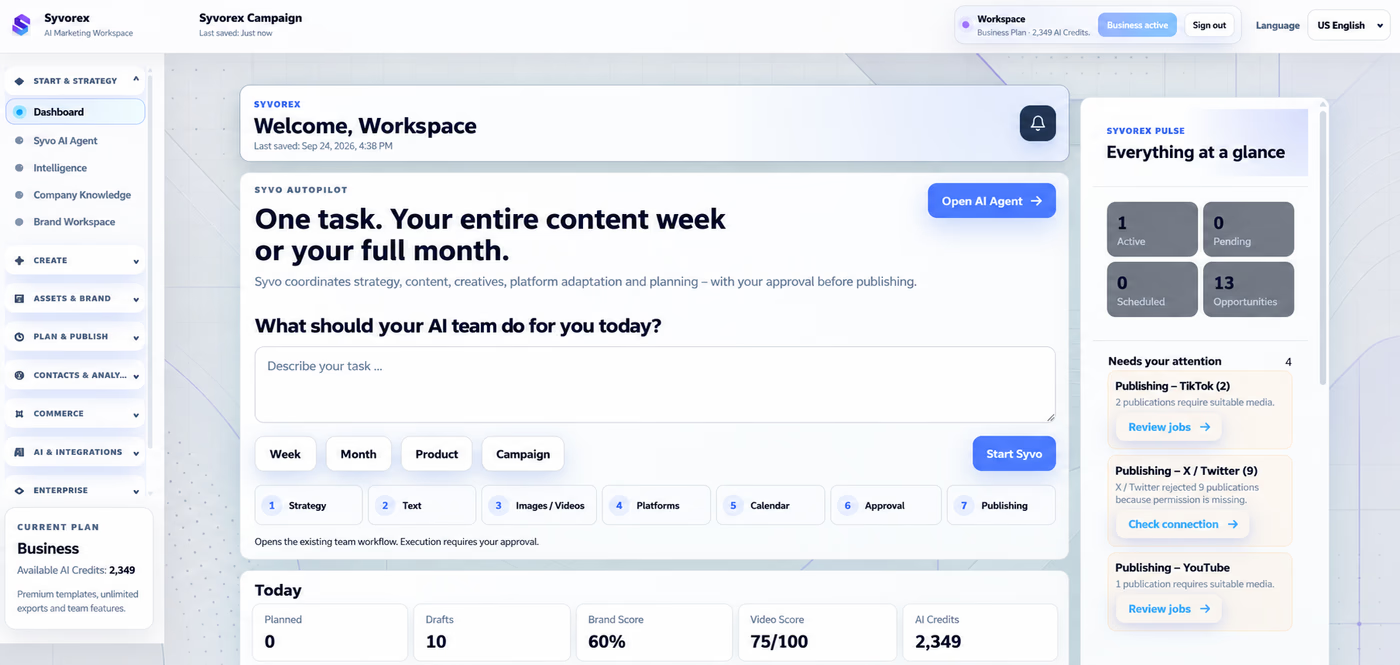
This shift is also the idea behind Syvorex.
Syvorex is being built around a simple concept:
Give Syvo a marketing goal and let it coordinate the workflow.
Instead of treating campaign planning, content creation, creatives and publishing as completely separate tasks, Syvorex connects them inside one marketing workspace.
A user can define a marketing goal, and Syvo can help coordinate campaign planning, channel-specific content, images and videos, publishing preparation and approvals while keeping the user in control of what ultimately goes live.
The objective is not to remove humans from marketing.
It is to remove unnecessary manual coordination.
What Should You Automate First?
Businesses do not need to automate their entire marketing operation immediately.
A practical starting point is to identify the most repetitive part of the workflow.
For some teams that is adapting the same campaign to several social networks.
For others it is creating creatives.
Another business may spend the most time scheduling content or maintaining brand consistency.
Start with one repeated workflow and measure how much time it saves.
Then connect the next step.
Over time, individual automations can become a much more complete marketing workflow.
The Future of AI Marketing Automation
AI content generation was an important first step.
But generating more content alone does not solve the operational complexity of modern marketing.
The larger opportunity is connecting strategy, brand knowledge, content, creative production, approvals, publishing and eventually performance learning.
That is where AI marketing agents can become genuinely useful for small businesses, creators and marketing teams.
Instead of opening five tools and giving each one a separate instruction, the workflow can begin with one goal.
The AI coordinates the work.
The human keeps control.
And the marketing process becomes faster without becoming disconnected.
Try a Goal-Based AI Marketing Workflow
If your current social media process still involves moving campaigns manually between several tools, you can explore Syvorex and see how a connected AI marketing workflow works.
Give Syvo a goal. It runs your marketing workflow.
Visit Syvorex:
https://www.syvorex.com