Most gyms and studios still sell one main product: a monthly membership. That works well for people who train three or four times a week in the same place. It works badly for a large group of people who train differently. They travel for work. They want to try reformer Pilates before committing to a pack. They mix yoga with boxing. Or they simply train a couple of times a month and do not want to pay for thirty days of access they will not use.
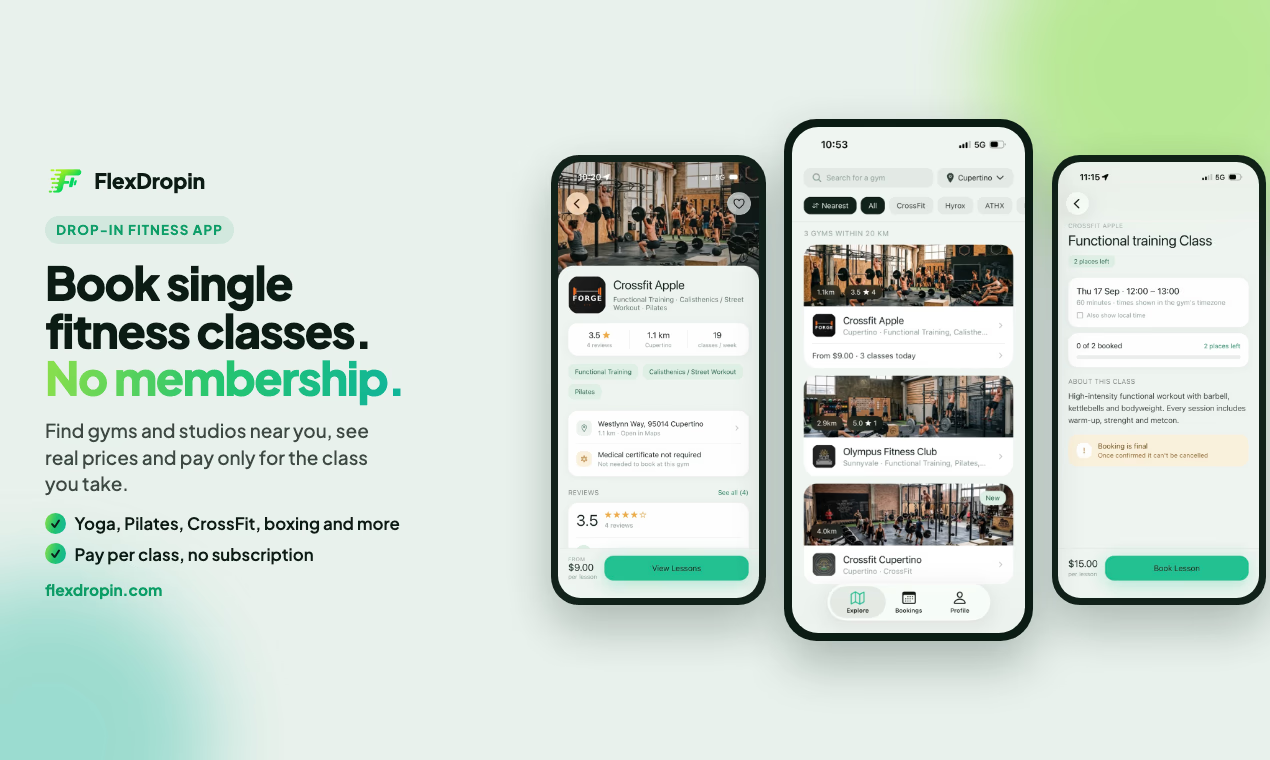
FlexDropin is a drop-in fitness app built for both sides of that gap. Athletes find a gym or studio near them, see the real price of a single class and book it in the app, with no membership. Gyms, studios and personal trainers list their classes for free, set their own price and pay a commission only when they sell. This article explains the problem we started from, how the app works on each side, and the choices behind its pricing model.
The problem: a membership model for people who don’t train on memberships
Paying every month for a gym you rarely use is expensive, and this is not just a feeling. In a study published in the American Economic Review in 2006, the economists Stefano DellaVigna and Ulrike Malmendier analyzed 7,752 members of three US health clubs over three years. Members who chose a contract with a flat fee of over $70 a month went to the gym on average 4.3 times a month. That works out at more than $17 per visit, when the same clubs sold a 10-visit pass at $10 per visit. On average, those members gave up about $600 in savings over their membership.
The study is two decades old, but the pattern is familiar to anyone who has paid for a gym in January and stopped going in March. A membership is a good deal only if you actually use it. For everyone else, paying per class is often cheaper, and it is certainly more flexible.
On the gym side the problem looks the opposite. A class with twelve places and nine bookings has three empty spots, and those spots earn nothing. Selling them one at a time is possible, but it usually means a phone call, an email, cash at the front desk or a third-party platform that decides how much the studio receives per visit. Many small studios simply don’t bother, and the spots stay empty.
How FlexDropin works for athletes
The athlete side is designed around one question: where can I train today, and how much will it cost?
- Find a place. Gyms and studios appear on a map and in search results, with filters by activity: yoga, Pilates, CrossFit, Hyrox, boxing, functional training, personal training and dozens of other categories.
- See the real price. Each gym shows its class calendar, the available spots and the price of a single class before you book. No “contact us for pricing”.
- Book and pay in the app. Payment happens in the app with Apple Pay or card. After booking you receive a confirmation email with a calendar invite.
- Don’t forget the class. A push reminder arrives before class, and on iPhone a home-screen widget and a Live Activity show your next class.
- Keep track. Bookings are listed in the app, and you can save favorite gyms and read reviews from other athletes.
There is no membership, no monthly fee for the athlete and no commitment. You pay for the class you take.
How FlexDropin works for gyms, studios and personal trainers
The gym side is designed for small and independent businesses that want to sell single classes without adding another monthly bill.
- Free listing. There is no subscription and no setup fee. Registration happens directly in the app.
- Classes your way. You can publish single or recurring classes, save templates for the classes you run every week and assign instructors.
- Your price. The gym sets its own drop-in price. Free classes are possible too, for example for an open day.
- Your Stripe account. Payments are charged on the gym’s own Stripe account. FlexDropin takes a 15% commission only on paid bookings, and payouts are monthly.
- Your numbers. A dashboard shows bookings and revenue, and the owner gets a notification for every new booking.
The partner page has short video tutorials on registration, connecting Stripe and creating the first class. If you run a gym or studio, you can list your classes for free on FlexDropin and see the whole flow before you sign up.
What a single class actually costs
Before writing a single line of marketing copy, we wanted to know what single classes really cost. So we read the price lists that gyms and studios publish on their own websites and built price guides from them, with every source linked. A few examples from US studios, read in October 2026:
Activity | Single class or drop-in |
|---|---|
Gym day pass (YMCA example) | $15 |
Yoga | $22–35 |
Pilates mat | $20–35 |
Reformer Pilates | $29–55 |
Boxing, CrossFit, Muay Thai | $25–40 |
Personal training, 60 minutes | $80–165 |
We also compared each drop-in price with the monthly membership of the same gym. In the examples we calculated, a single class costs the same as or less than the membership up to about four to seven visits a month. The full tables are in our guide to what a single fitness class costs.
Why no fixed fees for gyms
Most gym and studio software is sold as a monthly subscription. It has to be paid in a good month and in a bad month, whether or not it brings any new client. Credit-based marketplaces work differently, but they decide how much a studio receives for each visit, and the studio has little control over that number.
For a small studio we wanted the simplest possible model. A month with no bookings costs nothing. A month with 40 classes sold at $25, which is $1,000 in sales, costs $150 in commission. The studio decides the price, the money goes to its own Stripe account, and there is nothing to cancel if it stops using the app.
This model has limits, and we prefer to be clear about them. FlexDropin is built to sell single classes. It does not run recurring member billing, so a studio that lives on monthly memberships will still use its own software for that and can use FlexDropin as an extra channel for new and visiting clients.
Who FlexDropin is for
- People who train a few times a month and do not want to pay for a full membership.
- People who mix activities, for example yoga once a week and boxing once a week, and do not want two memberships.
- Travelers, remote workers and students who need a class in a new city.
- Independent gyms, boutique studios, sports centers and personal trainers who want to fill empty spots and reach new clients without a monthly fee.
One account for both sides
A detail we care about: athletes and gym owners use the same app and the same account. A personal trainer who also takes yoga classes does not need two logins. The app is available on iOS and Android.
The data behind the idea
We also publish an open research page on drop-in fitness with 80 statistics, each linked to its primary source. It covers how people train, what they pay and how the market around single classes is changing. Every number on that page can be checked at the source.
Try it and tell us what you think
If you are an athlete, the next time you travel or want to try a new discipline, look for a class on FlexDropin instead of signing a contract. If you run a gym or a studio, publish one class and see who books it.
Feedback is very welcome, especially from people who run a gym or studio. What would make you list your classes? What would stop you? Those answers shape what we build next.