
Social media has become one of the most important growth channels for modern businesses. Whether you are running a startup, ecommerce store, local business, agency, or SaaS company, maintaining a strong social presence is critical for attracting customers, building trust, and increasing revenue. However, managing multiple social media platforms consistently can quickly become overwhelming. Businesses often spend countless hours creating content, scheduling posts, responding to comments, analyzing performance, and adapting strategies.
For years, traditional social media management tools helped businesses streamline these tasks through scheduling, publishing, and analytics features. Today, a new generation of AI-powered social media managers is changing the landscape. Instead of simply helping users manage social media, AI systems can actively create content, generate images and videos, optimize posting schedules, predict performance, automate engagement, and learn a brand's voice over time.
This evolution raises an important question: when comparing an AI social media manager vs traditional social media tools, which solution delivers better business growth? The answer depends on your goals, resources, and growth strategy. Understanding the strengths and limitations of both approaches can help businesses make smarter marketing decisions.
Understanding Traditional Social Media Tools
Traditional social media management tools were designed to simplify publishing and organization. They allow businesses to manage multiple social accounts from a single dashboard while reducing the manual effort required to post content consistently.
Most traditional platforms offer features such as content scheduling, post publishing, social media calendars, analytics dashboards, team collaboration, approval workflows, and content libraries. These capabilities have made them valuable tools for marketing teams and agencies for many years.
Traditional tools primarily function as productivity enhancers. They help users organize workflows and save time, but they typically require human involvement for strategic decisions and content creation.
- Create posts manually
- Schedule content across multiple platforms
- Monitor engagement metrics
- Manage content calendars
- Coordinate team collaboration
- Track campaign performance
While these capabilities remain useful, businesses still need to invest significant time creating content, researching trends, designing visuals, and optimizing campaigns.
What Is an AI Social Media Manager?
An AI social media manager goes beyond scheduling and analytics. It acts as an intelligent marketing assistant that can automate many of the tasks traditionally handled by marketers.
Modern AI platforms use machine learning, natural language processing, predictive analytics, and generative AI technologies to create and optimize content. Rather than simply helping users publish content, AI systems actively contribute to the content creation process and marketing strategy.
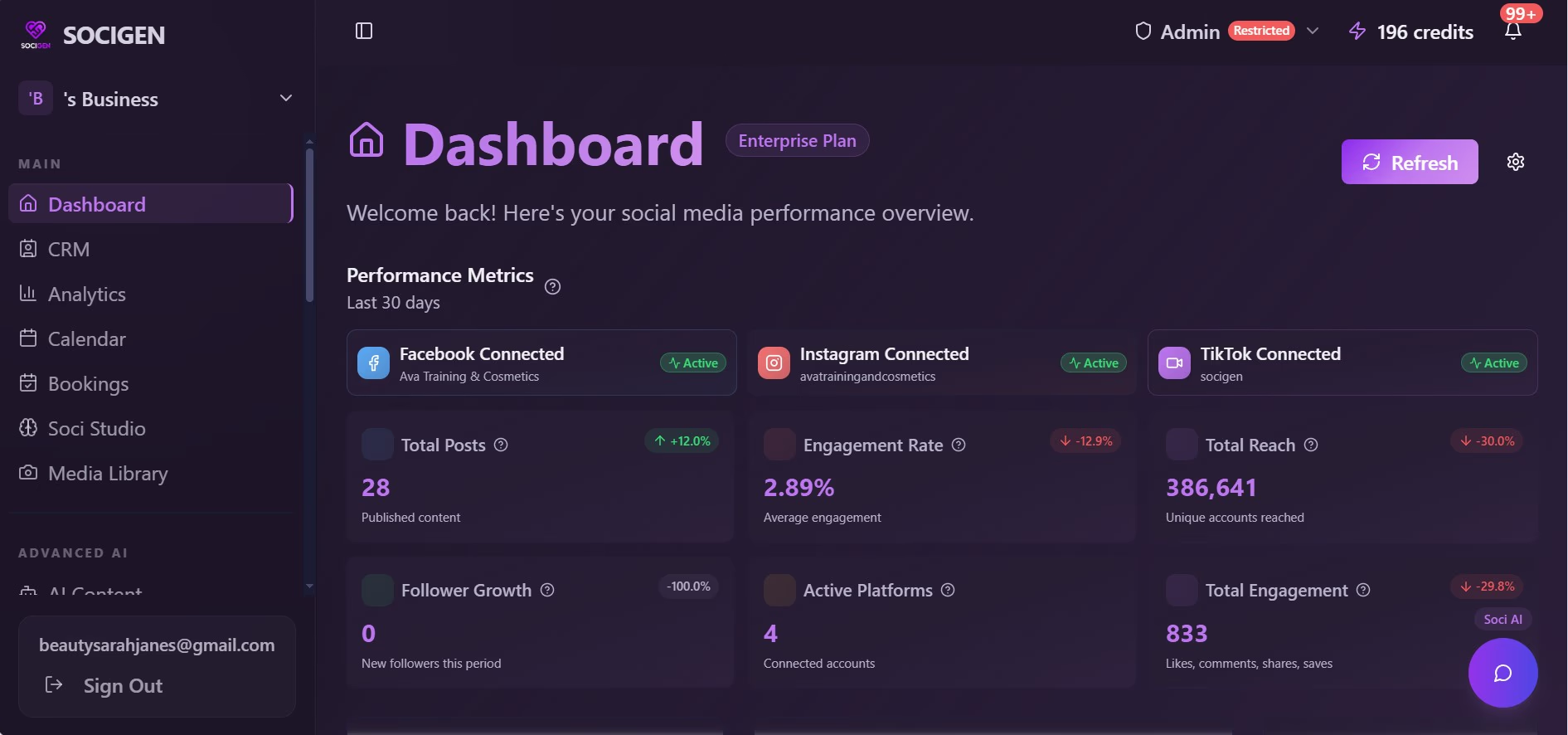
Platforms such as SociGen demonstrate this shift by combining AI-powered content creation, image generation, video production, social scheduling, analytics, email marketing, and personalized AI models trained on business-specific data. These systems can learn a company's products, services, brand voice, and target audience to generate highly relevant content automatically. This allows businesses to maintain consistency while dramatically reducing manual effort. Based on available platform information, SociGen uses personalized AI models trained on brand data to generate content, videos, emails, scheduling recommendations, analytics insights, and customer engagement workflows. :contentReference[oaicite:0]{index=0}
- AI content generation
- Brand voice training
- Image and graphic creation
- AI video generation
- Predictive performance analysis
- Optimal posting recommendations
- Automated content workflows
- Cross-platform publishing
- Marketing automation
- Customer engagement support
AI Social Media Manager vs Traditional Social Media Tools: Key Differences
The biggest difference between traditional tools and AI-powered solutions is automation intelligence.
Traditional tools focus on helping humans execute marketing tasks more efficiently. AI social media managers focus on helping businesses automate and optimize marketing decisions.
When comparing the two approaches, several distinctions become clear.
- Content Creation
Traditional tools require marketers to write captions, design graphics, and create campaigns manually. AI social media managers can generate platform-specific content, images, videos, hashtags, and content ideas automatically. - Brand Learning
Traditional systems typically store brand assets but do not learn from them. AI systems can analyze previous content, brand guidelines, and audience behavior to create more personalized outputs. - Scheduling Intelligence
Traditional scheduling relies on predefined calendars. AI scheduling uses engagement data and audience behavior patterns to identify optimal publishing times. - Performance Optimization
Traditional tools report analytics after content is published. AI platforms can forecast performance and recommend improvements before publishing. - Scalability
Traditional workflows often require hiring additional team members as content volume increases. AI systems allow businesses to scale content production without proportional increases in staffing.
How AI Improves Business Growth
Business growth depends on consistency, visibility, engagement, and conversion. AI-powered social media management can positively impact each of these areas.
One of the biggest challenges businesses face is maintaining a consistent posting schedule. Many companies start strong but struggle to sustain content production over time. AI significantly reduces the workload associated with content creation, allowing businesses to publish more consistently.
Consistency improves audience trust, increases platform visibility, and creates more opportunities for engagement. As a result, businesses can maintain stronger brand awareness without dramatically increasing marketing costs.
AI also enables faster experimentation. Businesses can test multiple content formats, messaging styles, visuals, and posting schedules at a scale that would be difficult to achieve manually.
- More frequent publishing
- Faster content production
- Improved audience targeting
- Better engagement optimization
- Reduced operational costs
- Increased marketing efficiency
- Enhanced personalization
These advantages can create a competitive edge, especially for startups and small businesses with limited marketing resources.
Where Traditional Social Media Tools Still Excel
Despite the advantages of AI, traditional tools continue to provide value in many situations.
Human creativity remains essential for storytelling, brand positioning, and emotional connection. While AI can generate content quickly, experienced marketers often provide deeper strategic insights and more authentic brand narratives.
Many businesses also prefer maintaining complete control over their content creation process. Industries with strict compliance requirements may require additional review and approval procedures that limit automation opportunities.
Traditional tools often offer simplicity and predictability. Teams that already have established content workflows may not need advanced AI features immediately.
In these cases, traditional platforms can still serve as effective management solutions while human marketers drive creative strategy.
The Rise of Personalized AI Social Media Management
The most significant advancement in AI social media management is personalization.
Early AI systems often produced generic content that lacked authenticity. Modern platforms are moving beyond generic outputs by training AI models on company-specific information. This allows the AI to better understand products, customer pain points, messaging frameworks, and brand identity.
Personalized AI systems can generate content that aligns more closely with business objectives while maintaining consistency across multiple channels. According to available information, platforms like SociGen focus on training personalized AI models using business-specific data to improve content quality and maintain brand consistency across content creation, email marketing, and social media management workflows. :contentReference[oaicite:1]{index=1}
This personalization reduces one of the biggest concerns businesses have regarding AI-generated content, which is sounding robotic or disconnected from their brand.
Cost Considerations for Growing Businesses
Cost is often a deciding factor when evaluating social media management solutions.
Traditional tools may appear less expensive initially. However, businesses must also consider the cost of content creation, graphic design, copywriting, video production, and ongoing management.
AI social media managers can consolidate multiple functions into a single platform. Instead of paying separately for content writers, designers, scheduling tools, and analytics platforms, businesses may be able to centralize these activities through one AI-powered system.
For startups and small businesses, this consolidation can significantly reduce marketing expenses while increasing output.
The return on investment often becomes more apparent as content demands grow. The larger the content operation becomes, the greater the efficiency gains AI can deliver.
Challenges and Limitations of AI Social Media Managers
While AI offers substantial advantages, businesses should maintain realistic expectations.
AI is not a complete replacement for strategic marketing expertise. The most successful businesses use AI as an accelerator rather than a substitute for human creativity and oversight.
Common challenges include:
- Need for brand training and setup
- Occasional content revisions
- Platform-specific nuances
- Maintaining authenticity
- Ensuring compliance requirements
- Monitoring AI-generated outputs
Businesses that combine AI automation with human review often achieve the strongest results.
Which Solution Is Better for Business Growth?
When evaluating AI social media manager vs traditional social media tools, the answer depends on your business goals.
If your objective is simply organizing content schedules and managing multiple accounts, traditional tools may be sufficient. They remain effective for teams with dedicated content creators and established workflows.
However, businesses focused on accelerating growth, increasing efficiency, reducing content creation time, and scaling marketing efforts will likely benefit more from AI-powered solutions.
The future of social media management is increasingly moving toward intelligent automation. AI systems can generate content, optimize publishing schedules, analyze performance, automate workflows, and personalize marketing efforts at a scale that traditional tools cannot match.
For startups, entrepreneurs, agencies, and growing businesses seeking a competitive advantage, AI-powered platforms represent a significant opportunity to achieve more with fewer resources.
Final Thoughts
The debate between AI social media manager vs traditional social media tools reflects a broader shift happening across digital marketing. Businesses are moving beyond simple scheduling software toward intelligent systems capable of creating, optimizing, and managing marketing activities automatically.
Traditional social media tools continue to play an important role, especially for teams that prioritize manual control and established workflows. However, AI social media managers offer substantial advantages in automation, scalability, efficiency, personalization, and growth potential.
As AI technology continues to evolve, businesses that adopt intelligent social media management solutions early may gain a meaningful advantage in content production, audience engagement, and overall business growth. The companies that successfully combine human creativity with AI-powered automation will likely be best positioned to compete in the increasingly crowded digital landscape.