
For many small business owners, content creation has become one of the most time-consuming parts of marketing. Between writing social media posts, creating captions, finding images, planning campaigns, and staying consistent across multiple platforms, it is easy to spend several hours every week just trying to maintain an online presence. Unfortunately, most business owners do not have dedicated marketing teams, which means content creation often competes with customer service, sales, operations, and business development.
This is where AI content creation is transforming the way small businesses market themselves. Modern AI-powered marketing platforms can help generate content ideas, create social media posts, produce captions, suggest hashtags, generate images, schedule content, and maintain brand consistency. Instead of spending hours creating content manually, business owners can now accomplish the same tasks in a fraction of the time while maintaining a professional and engaging online presence.
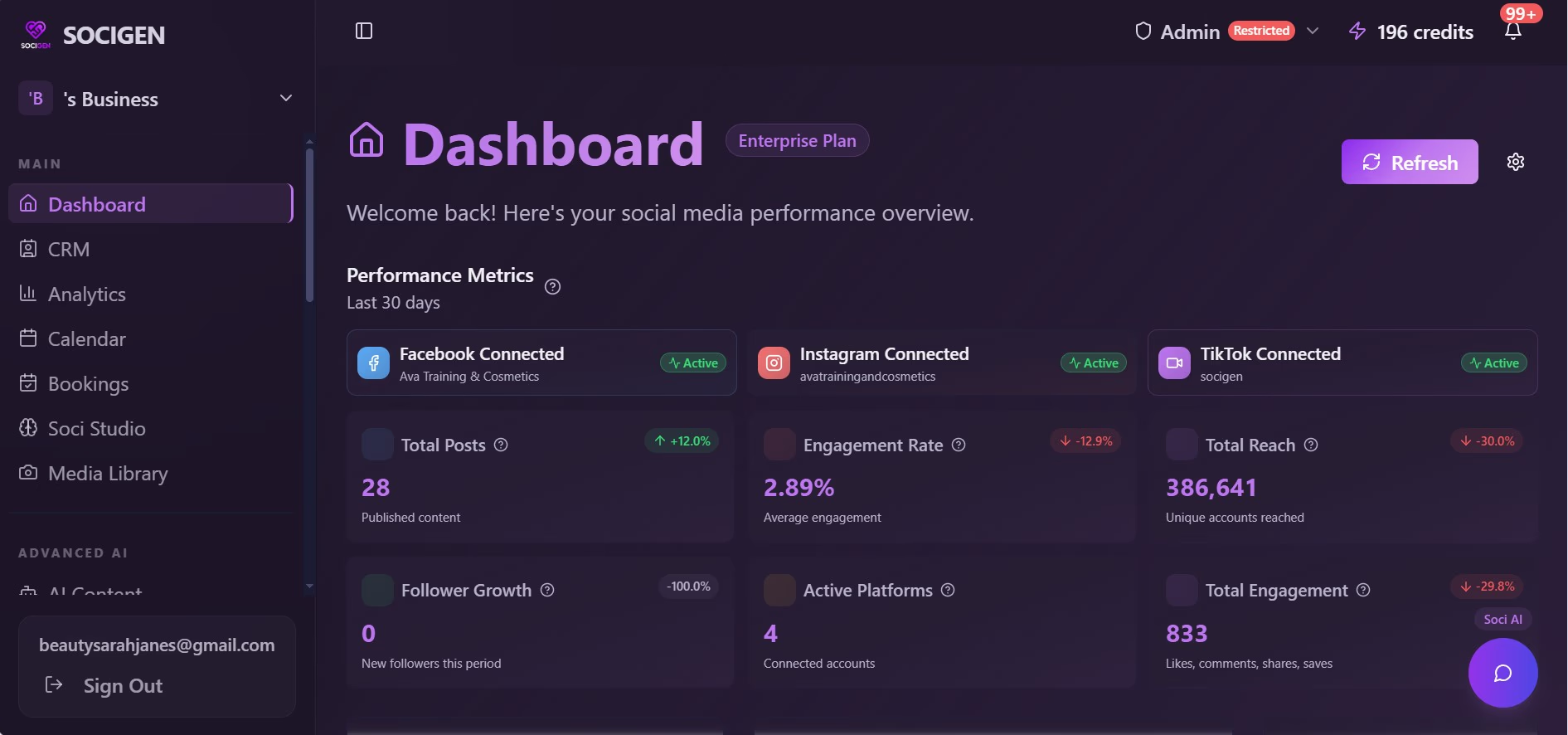
Platforms such as SociGen are designed specifically to help businesses automate digital marketing activities by combining AI-powered content creation, social media scheduling, image generation, CRM functionality, and marketing automation into a single platform. This allows business owners to spend less time creating content and more time focusing on growth, customers, and revenue.
In this guide, you will learn exactly how to use AI content creation to save more than 10 hours per week while improving the quality and consistency of your marketing efforts.
Why Content Creation Consumes So Much Time
Before discussing solutions, it is important to understand where time is typically lost.
- Brainstorming content ideas
- Researching industry topics
- Writing social media captions
- Creating platform-specific versions of content
- Finding or creating images
- Scheduling posts manually
- Managing multiple social media accounts
- Maintaining a consistent brand voice
- Creating email marketing campaigns
- Planning future content calendars
Many small business owners spend between 10 and 20 hours every week handling these tasks. The challenge becomes even greater when trying to maintain consistency across platforms such as Facebook, Instagram, LinkedIn, TikTok, Pinterest, and X.
The reality is that consistency drives visibility. However, consistency becomes difficult when content creation requires significant manual effort every day.
What Is AI Content Creation?
AI content creation refers to using artificial intelligence tools to assist with generating, optimizing, and managing marketing content. Rather than starting from a blank page, AI helps create first drafts, suggest ideas, personalize messaging, and automate repetitive tasks.
Modern AI content creation tools can assist with:
- Social media posts
- Captions and hashtags
- Blog outlines
- Email marketing campaigns
- Image generation
- Video content ideas
- Content calendars
- Marketing copy
- Lead nurturing messages
- Customer communications
The biggest advantage is speed. Tasks that previously required hours can often be completed in minutes.
Step 1: Train AI Using Your Business Information
The first step toward successful AI content creation is ensuring the platform understands your business.
Many business owners make the mistake of using generic AI prompts. This often results in content that feels robotic, generic, and disconnected from the brand.
A more effective approach is to provide the AI with:
- Business descriptions
- Products and services
- Brand guidelines
- Customer profiles
- Past marketing materials
- Frequently asked questions
- Website content
When AI understands your business, it can generate content that sounds more authentic and aligned with your brand voice.
This foundation dramatically reduces editing time because the content is already tailored to your business goals and audience.
Step 2: Create a Monthly Content Plan in One Session
One of the biggest productivity gains comes from batch planning.
Instead of creating content daily, dedicate a single session each month to planning your content calendar.
A simple monthly content structure may include:
- Educational content
- Customer success stories
- Product highlights
- Industry insights
- Behind-the-scenes content
- Frequently asked questions
- Promotional offers
AI can generate dozens of content ideas within minutes. Rather than spending several hours brainstorming topics, you can quickly build a complete month of content.
This approach alone can save multiple hours every week because you eliminate the daily decision-making process.
Step 3: Generate Social Media Posts at Scale
Once your content themes are established, AI can generate complete social media posts for each topic.
Rather than writing individual posts from scratch, you can provide a simple topic and allow AI to create:
- Attention-grabbing hooks
- Educational content
- Call-to-action statements
- Platform-specific formatting
- Hashtag suggestions
For example, a local business owner could generate an entire month's worth of posts in less than an hour.
The key is using AI as a productivity multiplier rather than a replacement for human oversight. Review the content, make small adjustments, and ensure it reflects your brand personality.
Step 4: Repurpose One Idea Across Multiple Platforms
A common mistake is creating separate content for every social network.
AI makes content repurposing significantly easier by transforming a single idea into multiple platform-specific formats.
For example:
- A LinkedIn educational post
- An Instagram caption
- A Facebook update
- A TikTok video script
- An email newsletter segment
This strategy allows you to maximize the value of every idea while maintaining a consistent message across channels.
Instead of creating five pieces of content, you create one and let AI adapt it for each platform.
Step 5: Use AI for Image Creation
Visual content often becomes a bottleneck for small business marketing.
Many business owners spend hours searching for stock photos, designing graphics, or working with external designers.
AI image generation tools can create custom visuals that align with your content strategy. These images can support:
- Social media posts
- Promotional campaigns
- Brand awareness content
- Product showcases
- Educational graphics
By generating images directly within the content creation workflow, businesses can dramatically reduce design-related delays.
Step 6: Schedule Content in Advance
Creating content is only half the battle. Publishing consistently is equally important.
AI-powered scheduling tools help automate content distribution across multiple social platforms.
Benefits include:
- Consistent posting frequency
- Reduced manual effort
- Better audience engagement timing
- Cross-platform publishing
- Improved content organization
Rather than logging into multiple social networks every day, you can schedule content weeks or months in advance.
This eliminates repetitive publishing tasks and frees up valuable time.
Step 7: Automate Email Marketing Content
Many small business owners focus heavily on social media while neglecting email marketing.
Email remains one of the highest-converting marketing channels available.
AI can assist with:
- Newsletter creation
- Promotional emails
- Customer follow-up sequences
- Lead nurturing campaigns
- Product announcements
By automating the drafting process, businesses can maintain regular communication with subscribers without spending hours writing emails every week.
Step 8: Build Repeatable Content Workflows
The biggest time savings occur when content creation becomes a repeatable system.
A highly efficient workflow may look like this:
- Generate monthly content ideas.
- Create social media posts.
- Generate supporting images.
- Repurpose content across channels.
- Schedule posts.
- Create email campaigns.
- Review analytics.
- Optimize future content.
Once this workflow is established, content creation becomes predictable and manageable rather than overwhelming.
How AI Content Creation Saves More Than 10 Hours Per Week
Let us compare a traditional workflow versus an AI-assisted workflow.
Traditional approach:
- Content planning: 2 hours
- Writing posts: 4 hours
- Creating graphics: 3 hours
- Scheduling content: 2 hours
- Email marketing: 2 hours
Total: 13 hours per week
AI-assisted approach:
- Content planning: 30 minutes
- Writing posts: 1 hour
- Creating graphics: 30 minutes
- Scheduling content: 30 minutes
- Email marketing: 30 minutes
Total: 3 hours per week
This represents a potential savings of approximately 10 hours every week, which can be redirected toward sales, customer relationships, product development, or business growth.
Common Mistakes to Avoid
While AI can dramatically improve productivity, there are several mistakes to avoid.
- Publishing AI content without reviewing it
- Using generic prompts that lack business context
- Over-automating customer interactions
- Ignoring brand voice consistency
- Relying entirely on AI for strategy
The most successful businesses use AI as an assistant rather than a replacement for human creativity and decision-making.
The Future of AI Content Creation for Small Businesses
AI is rapidly becoming an essential tool for small business marketing. As platforms continue to evolve, business owners will gain access to even more powerful automation capabilities, including personalized content generation, advanced audience targeting, automated campaign optimization, and integrated marketing workflows.
Businesses that embrace AI content creation today are positioning themselves to compete more effectively while operating with leaner teams and lower marketing costs.
The opportunity is not simply about creating more content. It is about creating better content faster while reclaiming valuable time. By implementing the strategies outlined in this guide, small business owners can save more than 10 hours every week, improve marketing consistency, and build a stronger digital presence without adding additional workload.
For entrepreneurs looking to scale their marketing efforts without hiring a large team, AI-powered platforms like SociGen provide a practical path toward efficient, personalized, and automated content creation that supports long-term business growth.