
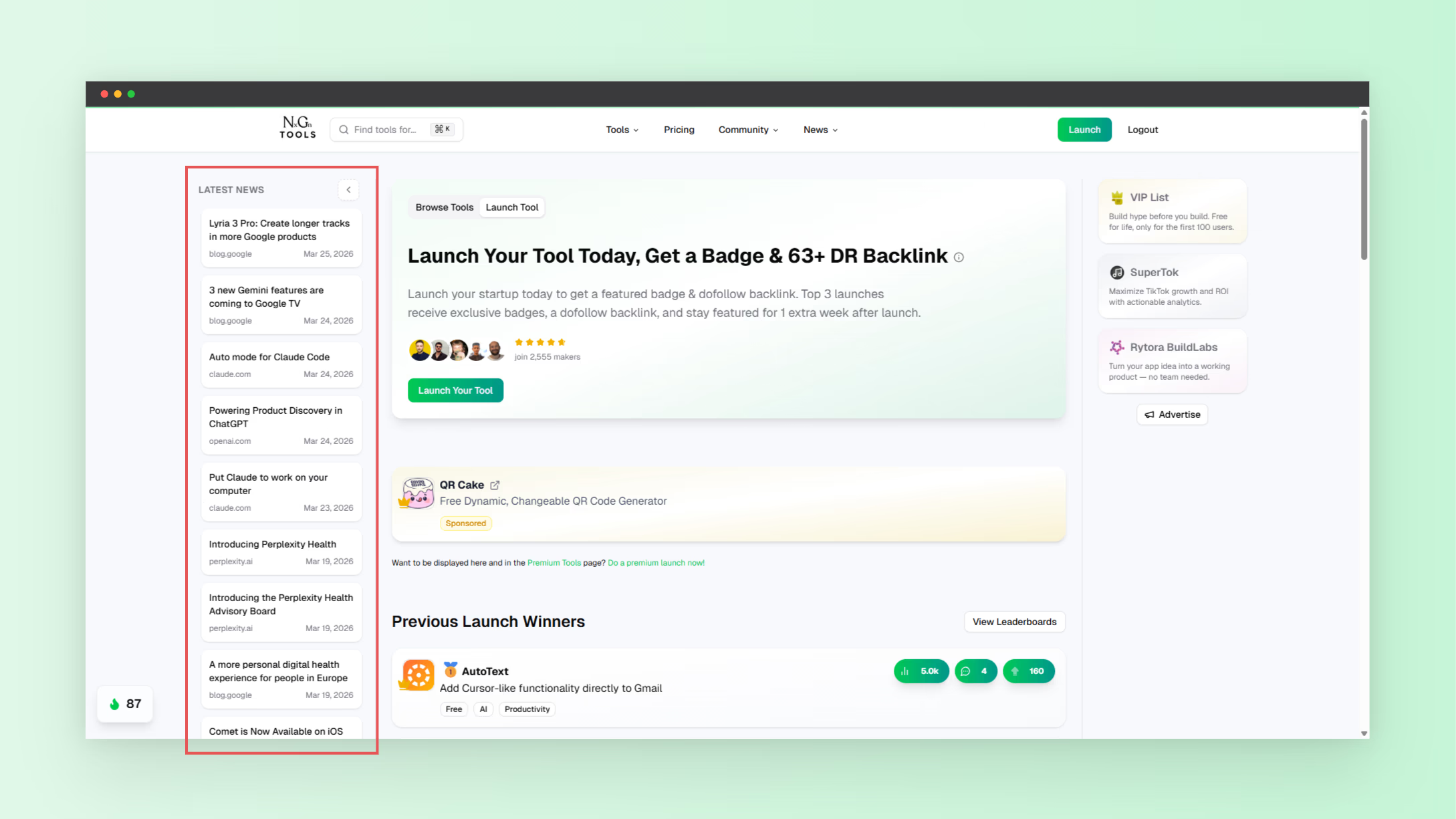
NextGen Tools has introduced a centralized news feed that aggregates links to official product update articles from leading AI and technology companies. This release focuses on simplifying how users monitor ongoing changes across major AI platforms by presenting curated titles and direct links from trusted sources.
Overview of the Update
NextGen Tools has launched a centralized tech news feed designed to simplify product update discovery across the artificial intelligence ecosystem. Instead of rewriting vendor announcements or summarizing technical posts, the platform displays curated links and titles from official product blogs. This approach ensures accuracy while keeping users connected to original sources.
The initial rollout includes updates from major AI vendors including OpenAI, Claude, Gemini, and Perplexity. These platforms release frequent updates across models, APIs, and infrastructure tools. Tracking these updates manually across separate blogs consumes time and increases the risk of missing key changes.
This update shifts NextGen Tools into a discovery-focused platform where users monitor vendor activity from a single location. It supports faster awareness and reduces the effort required to stay informed across multiple ecosystems.
What’s New
The latest release introduces a structured link-based feed designed to centralize product announcements across major AI platforms. Each entry connects users directly to official vendor posts without modification or reinterpretation.
- Aggregated official product update links
- Displays original article titles from vendor blogs
- Provides direct access to official product update pages
- Maintains source attribution to preserve credibility
- Organizes updates in chronological order
- Coverage from major AI companies
- OpenAI updates and release announcements
- Anthropic Claude feature updates
- Google Gemini product releases
- Perplexity platform improvements
- Planned vendor expansion
- ByteDance AI platform updates
- Meta AI ecosystem news
- OpenClaw developer tooling updates
- Cursor engineering workflow releases
- Upcoming real-world deployment tracking
- Engineering blog posts featuring production agents
- Case studies from operational teams
- Deployment architecture walkthroughs
- Lessons from real-world implementation
This structure keeps the platform lightweight while preserving complete context through original vendor sources.
Why This Update Matters in 2026
By 2026, the rate of AI product releases has increased across nearly every major platform. Vendors now release updates weekly, and many publish multiple feature improvements within short cycles. Teams building AI-powered products rely on continuous visibility into these changes to maintain performance and compatibility.
Manual tracking across separate vendor blogs introduces several workflow risks. Teams may miss critical feature updates, adopt improvements late, or spend unnecessary time researching scattered sources. A centralized feed removes these inefficiencies.
- Improves visibility across multiple vendors
- Reduces missed update risks
- Supports faster adoption of new capabilities
- Aligns with modern continuous-release workflows
The link-first model also supports transparency. Users read original vendor content without interpretation, ensuring access to diagrams, release notes, and technical examples published by the source.
Another major factor involves the rise of AI agent deployments. Teams now focus on production reliability rather than experimentation alone. Access to structured update discovery supports better infrastructure planning and integration timing.
Real-World Use Cases
The centralized feed supports practical workflows across multiple roles within modern technology teams.
Developers use the feed to monitor API changes and model improvements. Instead of tracking multiple RSS feeds or bookmarks, developers review a single timeline and open relevant updates. This improves workflow efficiency and reduces missed technical changes.
- Tracking SDK updates across vendors
- Monitoring API version changes
- Identifying performance improvements
- Reviewing new integration options
Product managers use the feed to monitor feature movement across competitors. When vendors release new automation capabilities, product teams evaluate roadmap adjustments and feature alignment.
- Reviewing vendor updates during sprint planning
- Identifying features that enhance user workflows
- Tracking ecosystem capability growth
Founders rely on centralized awareness to guide infrastructure decisions. Early visibility into platform changes supports faster decision cycles.
Operations teams benefit from structured deployment visibility. Upcoming additions focused on real-world agent deployments provide insight into production environments.
- Studying agent deployment case studies
- Reviewing architecture examples
- Learning from real implementation patterns
Before vs After Comparison
This update simplifies the process of monitoring AI ecosystem changes by replacing fragmented workflows with centralized discovery.
Before This Update | After This Update |
|---|---|
Users visited multiple vendor blogs manually | Users access a unified news feed |
Update tracking relied on bookmarks or RSS feeds | Updates appear in one structured timeline |
High risk of missing announcements | Improved visibility across vendors |
Fragmented discovery workflow | Centralized and searchable update access |
Limited cross-platform awareness | Continuous ecosystem monitoring |
Who Benefits Most
Several professional groups gain measurable advantages from centralized update discovery.
Developers reduce research time and improve technical awareness. Centralized discovery supports faster integration planning and minimizes missed compatibility changes.
Product managers gain clearer visibility into feature movement across vendors. This supports roadmap alignment with evolving platform capabilities.
Founders benefit from faster ecosystem awareness. Monitoring vendor changes supports strategic infrastructure planning.
Operations teams improve deployment reliability by tracking updates that affect system performance and integrations.
Researchers and educators gain access to multiple trusted sources in one location. This improves curriculum updates and technical education workflows.
As additional vendors join the platform, these benefits increase across wider segments of the technology ecosystem.
Final Take
This update introduces a practical improvement to how teams monitor product releases across the AI ecosystem. By focusing on official links and titles rather than rewritten content, NextGen Tools preserves source accuracy while improving accessibility.
The centralized model reduces research time and improves visibility across rapidly evolving vendor platforms. As the number of releases increases across 2026, structured aggregation becomes a core requirement for teams building AI-powered products.
Planned expansion into additional vendors and deployment-focused sources strengthens long-term value. The addition of real-world agent deployment content responds directly to user demand for implementation insight rather than feature announcements alone.
This release establishes a foundation for scalable product intelligence tracking. As more sources join the ecosystem, NextGen Tools strengthens its role as a trusted destination for discovering and monitoring technology updates.