
Choosing what to sell is not a creativity problem alone. It is a research problem. A product can look original, receive encouraging comments, and still fail to match the way buyers search, compare, and purchase. Sellers need a repeatable method for separating an interesting idea from an idea supported by demand.
Workspace AI is an AI market research tool that helps founders and ecommerce sellers organize marketplace evidence into clear product hypotheses and next actions. Instead of asking a general chatbot to guess what people want, users can bring a real business question into a conversation and examine trends, keywords, competition, pricing, listings, shop patterns, and their own customer observations together.
This AI product research workflow helps users compare ideas instead of generating a longer, unprioritized brainstorm. The goal is not to predict human behavior with certainty. It is to make better decisions before investing heavily in a product, website, Shopify store, Etsy shop, or social media campaign.
What Does “What People Want” Actually Mean?
Demand is rarely proven by one metric. A viral post may show attention but not buying intent. A high-volume keyword may have overwhelming competition. A successful competitor may benefit from years of reviews, strong photography, or an audience that a new seller does not have.
Useful customer-demand research combines several signals:
- Search language: What phrases do buyers use when they describe the product or problem?
- Trend direction: Is interest rising, seasonal, stable, or fading?
- Marketplace activity: Are relevant products receiving visible sales, reviews, favorites, or engagement?
- Competition: How many credible alternatives already serve the same intent?
- Pricing: What range appears normal, and what value supports a different price?
- Buyer context: Who wants the product, for what occasion, and why now?
- Execution fit: Can the seller create, fulfill, explain, and market the idea well?
Workspace AI helps turn these inputs into a report that distinguishes evidence, assumptions, risks, and unanswered questions. That structure is more useful than a long list of disconnected product ideas.
Researching What People Want on Etsy
Etsy has marketplace search, public listings, visible shops, reviews, prices, and category patterns. That makes it possible to study how buyer language connects with actual products.
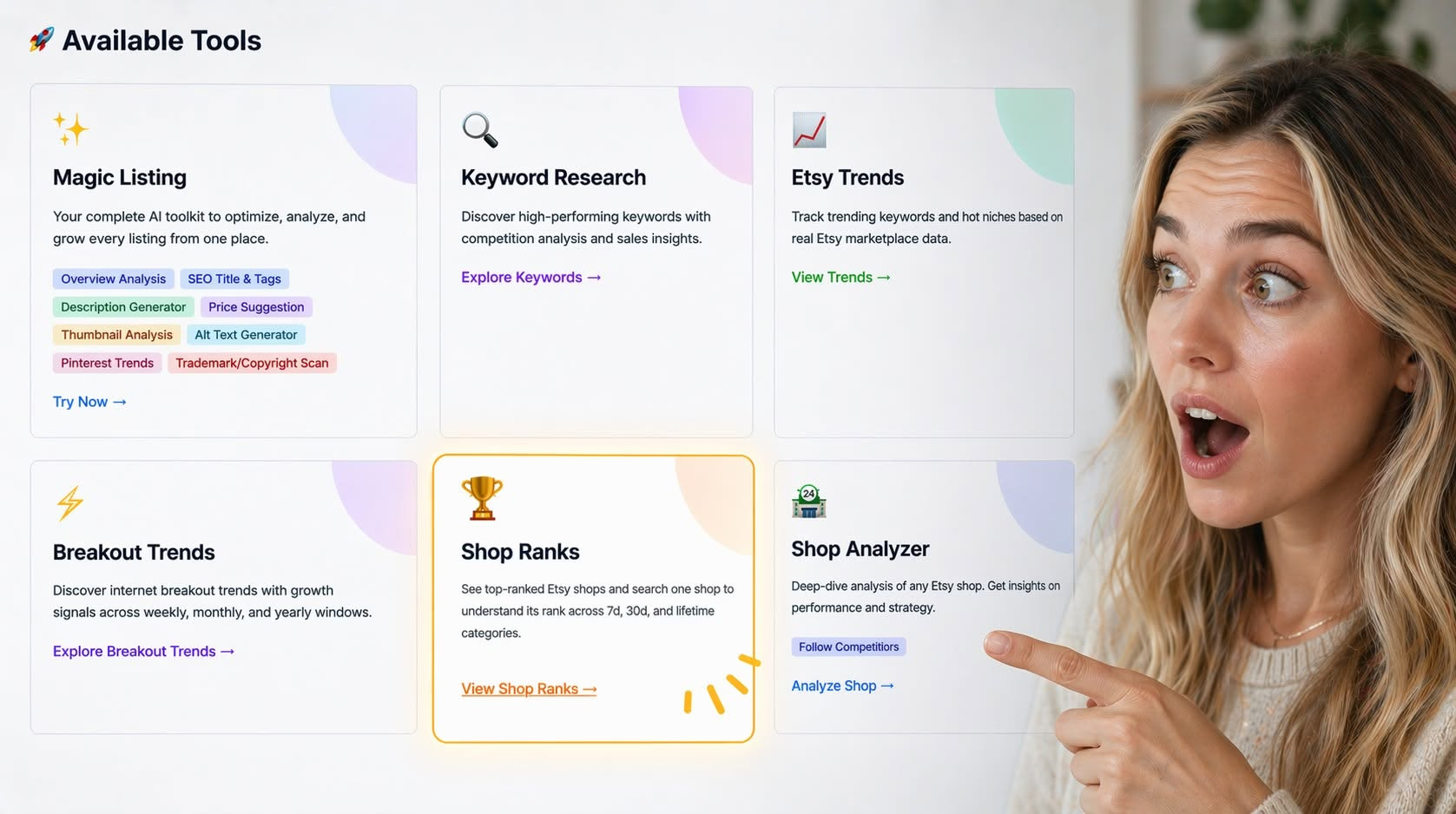
Begin with InsightAgent Trends to identify rising searches, seasonal movement, related product directions, and marketplace activity. A trend should be treated as a reason to investigate—not an instruction to copy whatever is currently popular.
Next, use Etsy Keyword Research to compare broad phrases with long-tail buyer terms. Look for the language that describes the product type, recipient, style, material, occasion, or intended use. The strongest keyword is not always the phrase with the largest audience; it is the phrase that accurately matches the product and reaches buyers the seller can realistically serve.
Competitor evidence matters too. Shop Analyzer helps sellers study how relevant public Etsy shops organize their catalogs, position products, use listing language, and develop product ranges. The purpose is to identify patterns and gaps—not copy another seller’s artwork, branding, or claims.
Workspace AI can bring these findings together and answer questions such as:
- Which product idea has the clearest buyer and search intent?
- Is this niche broad, saturated, seasonal, or still worth a small test?
- What evidence supports the idea, and what assumptions remain?
- Which five listings should a new Etsy shop research or create first?
- How could the product be differentiated through audience, format, style, or use case?
Using Workspace AI for Shopify Product Research
Shopify provides the storefront, checkout, catalog, and website-building workflow. It does not automatically supply marketplace discovery in the same way Etsy does. Shopify sellers usually need a plan for SEO, content, social media, email, advertising, partnerships, or an existing audience.
That makes research before storefront design especially important. Workspace AI can help organize Shopify product research into a target customer, product shortlist, collection structure, value proposition, buyer-language map, competitor observations, pricing assumptions, and traffic questions.
A Workspace AI report can become a brief for:
- The homepage promise and target audience
- Product and collection priorities
- Product-page questions and objections
- SEO topics and buyer-language themes
- Content and social media experiments
- Pricing and positioning assumptions
- Risks requiring supplier, margin, or fulfillment validation
InsightAgent does not connect to Shopify admin, publish products, select suppliers, manage orders, or run advertising. Its role is to improve the research and planning that happen before those operational decisions.
Turning Social Media Signals Into Researchable Ideas
Social media is valuable for discovering language, frustrations, aesthetics, communities, and emerging conversations. Comments can reveal repeated problems. Saves and shares can indicate that an idea resonates. Creators can expose new formats or visual styles.
However, social engagement is not the same as purchase demand. A post can perform well because it is funny, controversial, or visually satisfying without supporting a viable product.
A safer social media trend research workflow is:
- Record the repeated phrase, problem, audience, visual style, or occasion.
- Ask whether the signal is entertainment, information, identity, or buying intent.
- Search for related marketplace demand and competing products.
- Compare exact buyer keywords and price expectations.
- Identify what would make the product original and useful.
- Run a small test before expanding the catalog.
For downloadable formats, Digital Product Trends can help evaluate printables, planners, templates, SVG files, clipart, invitations, spreadsheets, and other digital products. Social observations can become hypotheses, while marketplace evidence helps decide which hypotheses deserve production.
Workspace AI does not read private social accounts or automatically import social analytics. Sellers can bring observed phrases, comments, post themes, audience questions, or exported notes into the research conversation and compare them with available marketplace evidence.
From Research Report to Product Page
A useful report should end with decisions, not more tabs. Workspace AI can organize the opportunity into:
- Target customer and buying situation
- Product concept and differentiation
- Evidence supporting the idea
- Keywords and buyer language
- Competitor and pricing context
- Channel choice: Etsy, Shopify, a website, or social-led commerce
- Risks and assumptions
- Smallest useful test
- Recommended next research questions
Once an Etsy product angle and keywords are validated, Magic Listing can help turn the research into seller-reviewed titles, tags, descriptions, pricing context, thumbnail feedback, image alt text, and potential infringement checks. For Shopify or an independent website, the same report can brief product-page copy and site structure, but every claim and recommendation should be adapted to the actual channel and offer.
A Practical Data-Driven Idea Workflow
Use this sequence when deciding what people may want:
1. Start with a buyer, not a product
Define the person, problem, occasion, identity, or desired outcome. “Teachers preparing classrooms in August” is more useful than “make a printable.”
2. Collect signals from more than one source
Combine marketplace searches, trends, listings, competitors, prices, customer questions, and social observations. One signal can inspire an idea; several aligned signals can justify a test.
3. Ask Workspace AI to compare options
Request a comparison based on demand, competition, timing, differentiation, price position, and execution difficulty. Ask the AI to identify weak evidence and unresolved assumptions, not only the most exciting opportunity.
4. Create a decision report
Summarize the audience, product hypothesis, evidence, keyword direction, competitors, risks, and recommended test. This report can brief collaborators working on an Etsy shop, Shopify store, website, or content campaign.
5. Test before scaling
Create the smallest version that can produce useful feedback: one listing, one landing page, a limited product set, a waitlist, or a small content experiment. Measure channel-specific behavior before expanding.
Why Workspace AI Is Different From Generic Brainstorming
Generic AI can produce hundreds of plausible ideas. The difficult part is deciding which idea fits current demand, a specific buyer, the chosen channel, and the seller’s constraints.
Workspace AI is positioned around that decision. It combines conversational research with marketplace evidence, confidence indicators, follow-up questions, and structured reports. It can also support new sellers with empty shops, established Etsy sellers reviewing a catalog, Shopify founders planning a storefront, and creators translating social observations into testable ecommerce ideas.
The result is not certainty. It is a clearer record of why an idea may be worth testing—and why another should be rejected.
Frequently Asked Questions
Can AI determine exactly what people want to buy?
No. An AI market research tool can organize demand signals, identify patterns, compare opportunities, and expose assumptions, but buyer behavior remains uncertain. Use Workspace AI to improve research quality and test design rather than treat a recommendation as a guarantee.
Can Workspace AI research products for both Etsy and Shopify?
Yes, with different channel assumptions. Etsy research can use marketplace search, listing, and shop evidence. Shopify research focuses on product positioning, buyer language, storefront structure, and traffic planning. Workspace AI does not access or operate Shopify admin.
How should social media trends be used for product research?
Treat social media trends as discovery signals. Capture recurring language, problems, audiences, styles, and occasions, then validate them against marketplace demand, keywords, competition, pricing, and buying intent before creating a product.
What can I do with a Workspace AI report?
Use it to brief an Etsy listing plan, Shopify storefront, independent website, product page, SEO strategy, social content test, designer, developer, or copywriter. Review every recommendation against your actual costs, policies, capabilities, and customer evidence.
Conclusion
The best product idea is not simply the newest trend or the keyword with the largest number beside it. It is an idea that connects a real buyer, a clear use case, credible demand signals, manageable competition, workable economics, and a seller capable of executing it.
Workspace AI helps organize that decision across Etsy, Shopify, websites, and social-media-led discovery. By combining trends, keywords, competitor evidence, pricing context, and customer observations, founders can replace random brainstorming with a research process—and decide what to test before they spend heavily building it.