

- Upvotes
- 0
- Comments
- 0
- Impressions
- 14
this week
discussions
this week
About
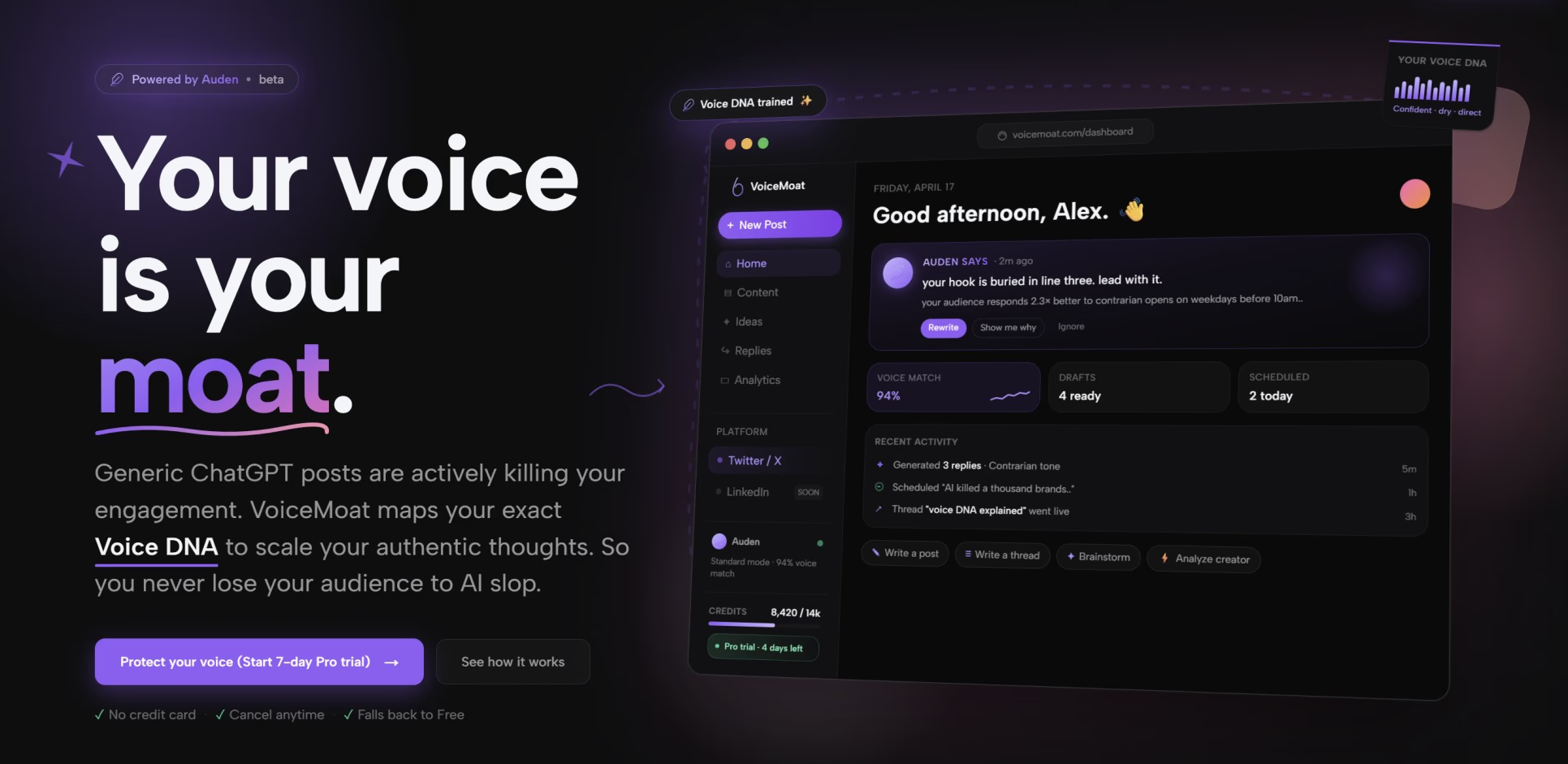
Generic AI posts are killing engagement on X, and the reason is not a temporary glitch the next model release will fix. It is mechanical. A general-purpose chatbot is trained to be helpful to everyone, which pulls every output toward a fluent, agreeable, broadly competent middle. That middle is the opposite of voice. When you paste a handful of your posts into a chatbot and ask it to write like you, it catches a few surface features on the first line, then slides back toward its default register by the third. The result reads as competent and forgettable, and in 2026 audiences scroll past competent and forgettable. VoiceMoat is built on a different premise: if voice is the point, the answer is not a better prompt, it is a different approach. Instead of prompting a general model with a few examples, VoiceMoat trains Auden, the brain inside it, on your full writing profile. Not a sample. Your full profile: 100 to 200 of your posts, replies, threads, and even the images you share. Auden reads that profile across 10 signals of voice and builds a stable picture of the patterns that make your writing recognizably yours. Those 10 signals are cadence, hooks, tone, rhythm, vocabulary, structure, length, openers, references, and sign-offs. Together they form your Voice DNA: the measurable, trainable fingerprint of how you actually write. This is voice training on your own work. It is not voice cloning, and it is not a generic model wearing your name as a costume. The distinction matters, because a model anchored on your full profile can hold your voice across a whole post and across a whole session, where a prompted model cannot. You train Auden once, then write in your voice every day. Content Studio is where you draft tweets, threads, and repurposed posts in your own register, and plan ahead with strategy fill. Reply Coach gives you voice-matched replies both in the dashboard and in the VoiceMoat Chrome extension, so you can grow through replies without sounding like a reply bot. Ask Auden is a chat that knows how you write: brainstorm angles, refine a draft, or pressure-test an idea, with Auden carrying the context of your voice and your past work. The feature that ties it together is the Voice Match score. Every draft Auden produces comes back with a percentage match against your baseline, so the gap a general chatbot leaves invisible is measured on the page. On top of that, a set of quality gates refuses drafts that fall below your baseline instead of handing them to you to clean up, and the AI vocabulary cluster and the symmetric hook templates are on the taboo list by default. Voice Drift Detection watches for the slow slide away from your baseline that happens when your focus shifts, and tells you when it is time to retrain. VoiceMoat also tells you what is working. Auden Intelligence breaks your analytics down by tone, surfaces the hooks that actually move reach for you specifically, and helps you diagnose a reach drop instead of guessing at it. Voice Lab is where you train, tune, and audit your voice: review your dimensions, retrain Auden, set your Voice Guard taboos, and teach Auden the specifics it should know about you. You can keep more than one voice profile (up to 10 on the top tier), which is what makes VoiceMoat work for ghostwriters and agencies who run several client voices and need each one to stay on-voice. Auden comes in two depths. Auden Standard powers the Starter and Creator plans for fast, on-voice drafting. Auden Deep, available on Pro and during the free trial, is the deeper mode for the highest voice fidelity. You never have to think about the machinery underneath. The only surface is Auden. The philosophy is consistent throughout: Auden suggests, you decide. VoiceMoat is a writing partner, not an autopilot. It drafts in your voice and scores the result, but a human stays in the loop on every post that ships. That is the honest version of AI-assisted writing, and it is the version that protects your voice instead of slowly averaging it away. VoiceMoat fits anyone whose voice is an asset: solo creators posting daily, founders building in public who refuse to sound like founder-platitude AI, fintwit and crypto writers who get ignored the moment they go generic, and the ghostwriters and agencies who write for them. If you post occasionally and enjoy heavy editing, a chatbot and a style guide may be enough. VoiceMoat earns its place the moment voice becomes the thing your audience follows you for and the editing tax starts eating the hours the AI was supposed to give back. Pricing is simple and in USD. Every paid plan starts with a free 7-day Pro trial, with no credit card up front, so you can train Auden and fall for the product before any price tag appears. Starter is $25 a month, Creator is $50, and Pro is $100. Annual billing gives you two months free on every tier ($250, $500, and $1,000 respectively). A free keepalive plan means you never lose your data or your trained voice profiles, even if you pause. Your voice is the one thing your competitors cannot copy and a general model cannot average away. VoiceMoat exists to protect it and to put it to work: posts in your voice, every day. Your voice is your moat.
Problem & solution
Problem
Generic AI tools make every creator on X sound identical, killing engagement.
Solution
VoiceMoat builds your personal Voice DNA and generates content that sounds like you.
Who it's for
Creators, founders, ghostwriters, and agencies
Comments
0 shownShare your thoughts about this tool.
Sign in to leave a comment.
No comments yet. Be the first to leave one.