
Confidence Interval Calculator for Mean
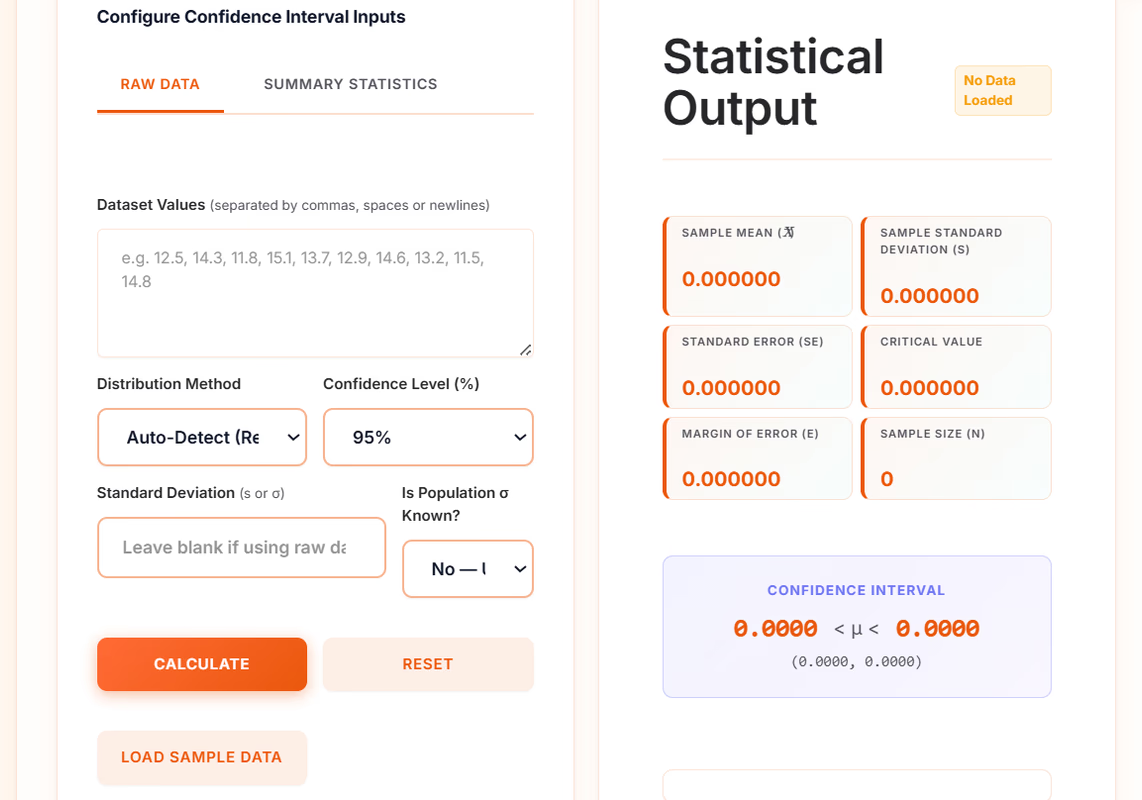
Our free confidence interval calculator for mean computes
by info2936
FreeWeb
- Upvotes
- 0
- Comments
- 0
- Impressions
- 1
this week
discussions
this week
About
Introduction to the Confidence Interval Calculator for Mean A confidence interval calculator for mean is a statistical tool that estimates the range within which the true population mean is likely to fall, based on sample data. In inferential statistics, researchers rarely have access to an entire population. Instead, they draw random samples and use those samples to infer population parameters. The confidence interval is one of the most important constructs in this inference process, providing both a point estimate (the sample mean) and a measure of the uncertainty surrounding that estimate (the margin of error). Whether you are a college student completing a statistics assignment, a graduate researcher analyzing clinical trial data, or a data analyst preparing a quarterly report, understanding how to compute and interpret a confidence interval for population mean is essential. This calculator automates the entire process: you provide your sample data or summary statistics, select a confidence level, and the tool returns the lower bound, upper bound, margin of error, critical value, standard error, and a full step-by-step mathematical breakdown rendered in publication-quality LaTeX. The distinction between using a z-distribution and a t-distribution is critical. When the population standard deviation ( ) is known and the sample is drawn from a normal population (or the sample size is large, typically ), statisticians use the z-interval. When is unknown and must be estimated from the sample standard deviation ( ), the t-interval is appropriate. Our confidence interval calculator for population mean automatically detects which method to use based on your inputs, or you can override the selection manually.
Problem & solution
Problem
Students struggle to calculate and understand confidence intervals for a population mean.
Solution
Calculate a mean confidence interval quickly with clear, step-by-step results.
Who it's for
Statistics students, researchers, teachers, and data analysts.
Main features
- Calculates confidence interval
- Supports 90%, 95%, and 99% con
- Calculates standard error auto
Use cases
- Check statistics homework and confidence interval
- Analyze research data and verify statistical resul
Comments
0 shownShare your thoughts about this tool.
Sign in to leave a comment.
No comments yet. Be the first to leave one.