
Surfer is the most recognizable name in SEO software, a content optimization suite it says is used by more than 150,000 marketers. Fokal is the newer machine we ranked first in our best AI visibility tools roundup. The comparison got interesting this year because Surfer now brands itself an AI visibility platform, which is the territory Fokal was built in, and both have a $99 tier. Same price, very different theory of what you are paying for. Surfer sells you a better way to do the work. Fokal does the work.
What Surfer actually does
Surfer is a workbench for people who make content. The Content Editor scores your draft against what already ranks, with live guidelines for terms, headings, and structure; the Content Score behind it has been the industry's shorthand for "optimized" since 2018. Around the editor sit a Topical Map for planning content angles, a Content Audit that spots weak pages and content gaps, Surfy, an AI assistant that edits inside your documents, and AI-generated drafts when you want a starting point instead of a blank page.
The newer piece is AI Tracker, which monitors how your brand shows up in AI answers across ChatGPT, Google AI Overviews, Gemini, and Perplexity. Surfer has leaned into this hard. The homepage now leads with "Be The Answer in Google" and everywhere buyers search, and claims content optimized with Surfer is 25 percent more likely to get cited by AI.
Who it suits: teams that produce content in volume and want it graded before it ships. Agencies, in-house SEOs, anyone with writers on payroll. A 4.8 out of 5 Trustpilot rating across 2,000 plus reviews says the people it suits like it a lot.
Standout: the editor. Nothing else in the category matches its combination of maturity, ranking data, and adoption, and the tracker adds real AI visibility measurement on the higher plans.
Honest limitation: Surfer is tooling, and tooling waits for an operator. The documents you buy still need someone to write, publish, and promote them, and nothing on the feature list builds links. If nobody on your team has hours for SEO this month, Surfer produces nothing this month. A "Surfy Agent" is listed as upcoming, so Surfer clearly sees the same gap.
What Fokal actually does
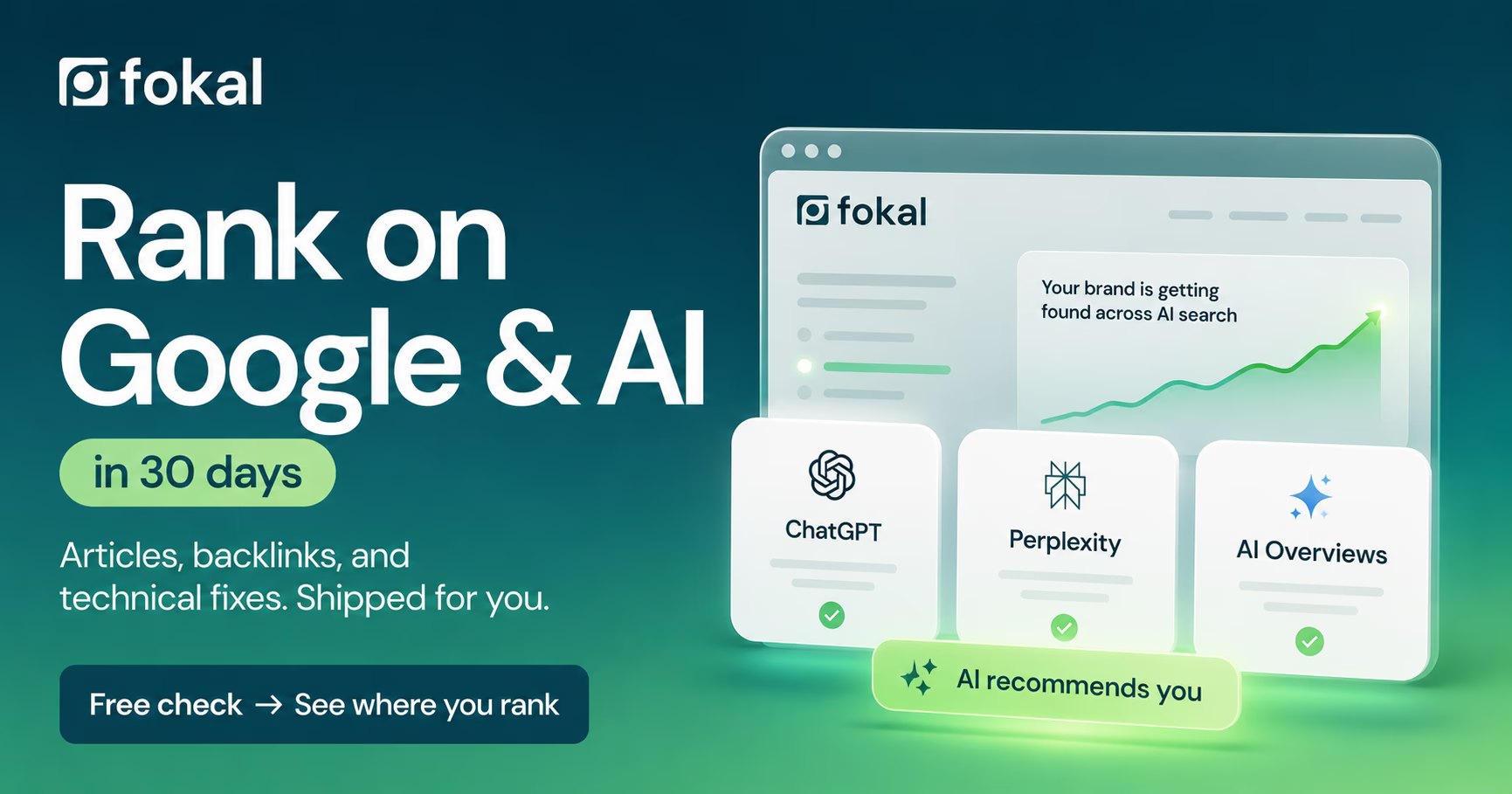
Fokal runs a loop rather than a workbench. It researches, writes, and publishes an article every day, earns do-follow links from relevant sites as it goes, then tracks whether ChatGPT, Perplexity, and Google AI Overviews are recommending your brand, and feeds what it finds back into what it writes next. The company's framing is that it "writes the articles and earns the backlinks until ChatGPT and Google recommend you."
Who it suits: a single brand run by a founder or small team with no content hours to spare, where the goal is becoming the name AI engines recommend.
Standout: the work arrives finished. Content goes live daily, links accumulate, and visibility is tracked per query on every plan, with an AI agent on the $99 tier that watches results and queues the next fixes itself.
Honest limitation: there is no editor for grading content you write yourself, so a team with in-house writers loses Surfer's biggest strength. Tracking covers three engines where Surfer's higher plans cover more, including Gemini. Native publishing is Wix, Webflow, and Shopify, a short list next to Surfer's Google Docs and WordPress workflows.
Who is doing the work
This is the real fork in the road, so run the $99 head-to-head slowly.
Surfer Standard at $99 a month, billed yearly, includes 360 documents to create or optimize, the full guidelines system, and AI visibility tracking in ChatGPT with 25 prompts refreshed weekly. Every one of those documents still needs a human to write it, or at least to steer, edit, and publish what the AI drafts. Surfer multiplies the output of hours you were already going to spend.
Fokal Pro at $99 a month publishes a researched article every day, earns links around it, and tracks the results across three engines. No hours required beyond reviewing what ships. It replaces the labor rather than sharpening it.
Neither is wrong. They are answers to different problems. If your bottleneck is quality, Surfer raises it. If your bottleneck is that the work does not happen at all, SEO automation that finishes the job is the thing to buy.
Both track AI visibility now, differently
Credit where due: Surfer added genuine AI visibility measurement while most SEO suites were still selling blue-link rankings. The differences are in depth and what happens next.
On Surfer's $99 plan, tracking covers ChatGPT only, 25 prompts, refreshed weekly. Daily refresh across the wider engine set starts at $182. The tracker's output is insight, and insight waits for your team to act on it, which loops back to the operator problem.
Fokal tracks ChatGPT, Perplexity, and Google AI Overviews on every plan, and the tracking is wired directly into the content machine: what the engines are and are not citing shapes what gets written tomorrow. It is the difference between a dashboard you check and a thermostat that acts. And because AI answers lean heavily on cited sources, the link side matters as much as the content side. Among AI SEO tools, Fokal is unusual in bundling link earning with the writing; Surfer has no link mechanism at any tier, which caps how far optimization alone can move AI citations.
Pricing, side by side
Surfer, billed yearly: Discovery at $49 a month with 120 documents and 10 tracked pages, Standard at $99 with 360 documents and weekly ChatGPT tracking, Pro at $182 with daily tracking of 50 prompts across platforms and five brand workspaces, Peace of Mind at $299 with unlimited documents under fair use, Enterprise from $999.
Fokal: a free plan that publishes one article a week through its network, Starter at $49 a month for three articles a week, Pro at $99 for daily articles plus the agent. You can watch the loop work on the free plan before paying anything.
The comparable spend is $99 against $99. On one side, 360 documents worth of tooling and a weekly ChatGPT check. On the other, daily published articles, link earning, and three-engine tracking. The gap between those two bundles is the cost of the hours Surfer assumes you have.
Which one to buy
Choose Surfer if content is already being produced and your job is making it better. The editor is the industry standard for a reason, the audit and topical tools are deep, and if you want Gemini in your AI tracking, Surfer covers engines Fokal does not.
Choose Fokal if there is no one to sit in the editor. A founder running the whole business does not need a better grading rubric for articles that are not getting written; the useful product is the articles themselves, published, linked, and measured against the AEO tools goal that actually matters in 2026, being the brand the answer engines name.
Our pick for a single brand without a content team is Fokal, for the same reason it topped our roundup: it closes the loop between doing the work and knowing whether the work is landing. Surfer makes you better at SEO. Fokal does the SEO for you.