
Applying for jobs today can feel exhausting, especially when every career expert tells you to customize your resume for every single application. While tailoring your resume is important, completely rewriting your resume for every job posting is unrealistic for most people. Between researching companies, filling out applications, and preparing for interviews, job seekers often spend hours making tiny resume edits that may not even improve results.
The good news is that you do not need to rebuild your resume from scratch every time you apply. Instead, you can strategically tailor your resume to match job descriptions while keeping your core experience intact. This approach helps you save time, improve ATS compatibility, and increase your chances of landing interviews without turning the application process into a full-time job.
Modern hiring systems rely heavily on Applicant Tracking Systems, commonly called ATS software. These systems scan resumes for keywords, skills, and qualifications before a recruiter even sees your application. Because of this, subtle changes can make a major difference. Small adjustments to wording, summaries, skills, and accomplishments often provide enough alignment to improve your visibility in recruiter searches and automated screenings.
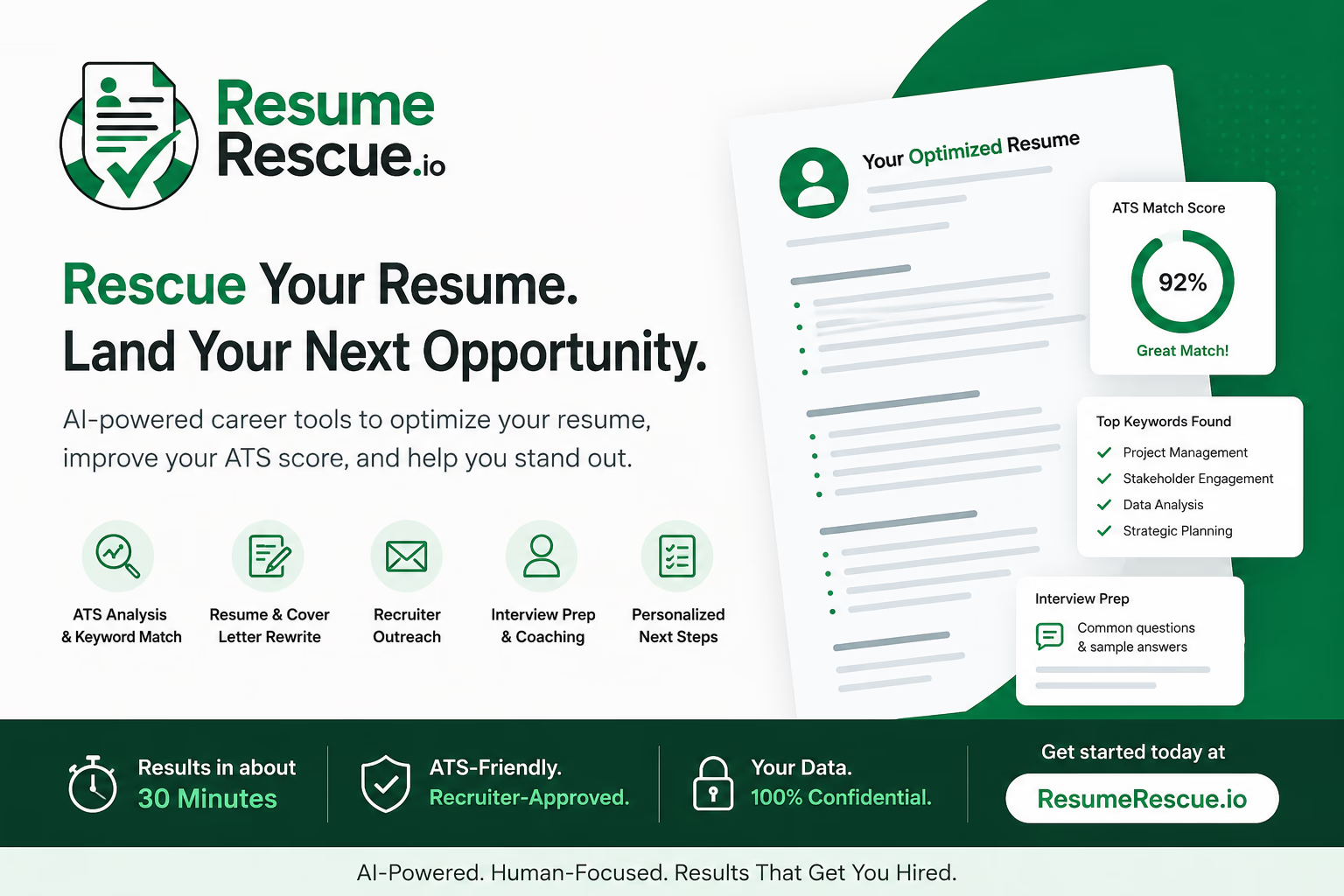
Platforms like ResumeRescue.io are designed specifically to help job seekers optimize resumes faster using AI-powered analysis, keyword gap detection, ATS optimization, tailored cover letters, recruiter outreach templates, and interview preparation resources. Instead of manually guessing which changes matter most, users can upload their existing resume, paste the target job description, and receive professionally optimized career materials typically within minutes.
Why Resume Tailoring Matters More Than Ever
Years ago, a generic resume could still generate interviews if your experience was strong enough. Today, hiring workflows have changed dramatically. Most employers receive hundreds of applications for a single role, especially remote positions. Recruiters use ATS systems to filter candidates quickly, which means resumes lacking relevant keywords may never reach human review.
Tailoring your resume helps bridge the gap between your existing experience and the language employers expect to see. Recruiters are not only looking for qualifications. They are also looking for alignment. When your resume reflects the terminology and priorities listed in the job posting, it becomes easier for both software systems and hiring managers to recognize you as a qualified candidate.
This does not mean you should exaggerate skills or fabricate experience. Effective tailoring simply reframes your real experience using language relevant to the target role. For example, one company may say “client success management” while another says “customer relationship management.” If your experience overlaps both areas, adjusting terminology can improve matching without changing the substance of your background.
Tailoring also demonstrates effort. Hiring managers often notice when candidates clearly understand the position and customize their application accordingly. A resume that speaks directly to the company’s needs feels more intentional and focused than a completely generic document.
Start With a Strong Master Resume
The easiest way to tailor resumes efficiently is by maintaining a comprehensive master resume. This document should contain all your experience, accomplishments, certifications, technical skills, leadership roles, projects, and measurable achievements.
Your master resume acts as a source library rather than a polished application document. Instead of rewriting information repeatedly, you can selectively pull the most relevant content into tailored versions.
A strong master resume should include:
- All previous job positions
- Detailed bullet points for each role
- Technical and soft skills
- Certifications and licenses
- Major accomplishments with metrics
- Relevant projects
- Leadership experience
- Volunteer work if applicable
Having this foundation dramatically speeds up the customization process because you are editing and reorganizing existing content instead of creating entirely new material every time.
Identify the Most Important Keywords in the Job Description
One of the fastest ways to tailor your resume without rewriting everything is by focusing on strategic keyword alignment. Most job descriptions repeat important terms multiple times. These repeated phrases often reveal what the employer prioritizes most.
Start by carefully reading the job posting and highlighting:
- Required technical skills
- Software platforms
- Industry terminology
- Leadership expectations
- Core responsibilities
- Preferred qualifications
- Communication or collaboration skills
Next, compare those keywords to your existing resume. If you already possess those skills or experiences, adjust your wording naturally to reflect similar terminology.
For example:
- Change “Managed social accounts” to “Managed social media marketing campaigns”
- Change “Worked with clients” to “Managed client relationships and customer communications”
- Change “Led team meetings” to “Facilitated cross-functional team collaboration”
These are relatively small edits, but they can significantly improve ATS matching and recruiter relevance.
Customize Your Professional Summary First
Your professional summary is one of the easiest and most effective sections to tailor quickly. Since it appears near the top of the resume, recruiters and ATS systems often weigh it heavily.
Instead of using a vague generic summary, create a version that directly reflects the target role.
For example, a generic summary might say:
“Experienced marketing professional with strong communication and leadership skills.”
A tailored version could say:
“Results-driven digital marketing professional with experience managing multi-platform campaigns, SEO optimization, content strategy, and analytics reporting for fast-growing brands.”
The second version immediately aligns with many digital marketing job descriptions while still accurately representing real experience.
This small adjustment alone can improve relevance dramatically without requiring major resume reconstruction.
Prioritize Relevant Experience Instead of Rewriting Everything
You do not need to completely rewrite every bullet point under every job. Instead, focus on prioritization.
Recruiters often skim resumes quickly, which means placement matters almost as much as content itself. Reordering bullet points allows you to highlight the most relevant accomplishments first.
If you are applying for a project management role, lead with project coordination achievements. If you are applying for a customer success role, move client communication accomplishments higher.
This approach helps recruiters immediately see alignment without requiring you to rewrite entire job histories.
You can also remove less relevant details temporarily. For example, if an older role included unrelated tasks, condense those bullets and emphasize transferable skills instead.
Use Metrics to Strengthen Tailored Resume Sections
Quantifiable results help tailored resumes stand out because they demonstrate measurable impact rather than generic responsibilities.
Whenever possible, include:
- Revenue increases
- Efficiency improvements
- Growth percentages
- Team sizes
- Customer satisfaction metrics
- Project completion timelines
- Cost reductions
For example:
- “Increased customer retention by 22% through improved onboarding workflows”
- “Managed a team of 12 across multiple client campaigns”
- “Reduced support ticket resolution time by 35%”
Metrics immediately make accomplishments feel more credible and impactful. They also help differentiate your resume from applicants who rely only on generic descriptions.
Tailor Skills Sections Strategically
The skills section is another high-impact area for fast resume customization. Many ATS systems specifically scan skill sections to evaluate alignment.
Rather than listing every skill you possess, prioritize the ones most relevant to the target role.
For example, a resume targeting a data analyst role may prioritize:
- SQL
- Excel
- Tableau
- Python
- Data visualization
- Reporting dashboards
Meanwhile, a customer success role may prioritize:
- CRM management
- Client onboarding
- Account retention
- Customer communications
- Relationship management
- Conflict resolution
The key is relevance rather than volume. A focused skill section aligned to the job posting performs better than an overwhelming list of unrelated capabilities.
Optimize for ATS Without Sounding Robotic
Some job seekers make the mistake of stuffing resumes with keywords unnaturally. While ATS systems scan for relevant terms, recruiters still review resumes manually. If your resume sounds robotic or repetitive, it may hurt credibility.
The goal is natural integration. Use relevant terminology where appropriate while maintaining readability and professionalism.
Instead of awkward keyword repetition, incorporate terms organically into accomplishments and summaries.
For example:
Weak ATS stuffing:
“Project management, project manager, project planning, project delivery.”
Better integration:
“Led cross-functional project management initiatives that improved delivery timelines and stakeholder communication.”
The second version sounds more professional while still incorporating important keywords.
Use AI Tools to Speed Up Resume Customization
Tailoring resumes manually can still take significant time, especially during active job searches. This is where AI-powered resume optimization platforms can provide major advantages.
ResumeRescue.io helps job seekers quickly identify keyword gaps, optimize ATS compatibility, generate tailored cover letters, and prepare recruiter outreach materials based on target job descriptions. Instead of spending hours analyzing postings manually, users can streamline the process significantly.
The platform focuses on helping candidates bridge the gap between generic resumes and the highly targeted applications employers expect today. Features include:
- ATS-optimized resume rewrites
- Keyword gap analysis
- Tailored cover letters
- Recruiter outreach templates
- Interview preparation questions
- Personal brand guidance
- Downloadable career materials
This type of automation allows job seekers to maintain quality customization while reducing burnout from repetitive editing tasks.
Do Not Ignore Cover Letters and Supporting Materials
While resumes often receive the most attention, supporting materials can reinforce your application strategy. Tailored cover letters, recruiter outreach messages, and optimized LinkedIn profiles help create a more cohesive candidate presentation.
Even a short customized cover letter can strengthen your application by explaining why your background aligns with the role. This is especially useful for career transitions, competitive positions, or industries where communication skills matter heavily.
AI-powered career platforms increasingly help streamline these materials alongside resume optimization, allowing candidates to maintain consistency across applications.
Focus on Efficiency During Large Job Searches
One of the biggest mistakes job seekers make is over-customizing every application to the point of exhaustion. Spending four hours tailoring a single resume may not be sustainable during an extended job search.
Instead, create a repeatable system:
- Maintain a master resume
- Create several industry-specific versions
- Customize summaries and keywords quickly
- Prioritize relevant bullet points
- Adjust skill sections strategically
- Use AI tools to speed up optimization
This approach balances quality and efficiency. You still tailor applications enough to improve ATS alignment and recruiter relevance while avoiding complete rewrites every time.
Final Thoughts
Learning how to tailor your resume to a job description without rewriting everything is one of the most valuable job search skills in today's hiring environment. Employers want relevant, targeted applications, but that does not mean you need to recreate your resume from scratch for every opportunity.
Strategic keyword alignment, customized summaries, reordered accomplishments, focused skill sections, and ATS optimization can dramatically improve application performance with relatively small changes.
Modern AI-powered career tools like ResumeRescue.io are helping job seekers simplify this process even further by automating resume analysis, identifying keyword gaps, and generating optimized career materials faster than traditional manual editing.
The key is consistency and efficiency. Small targeted improvements applied strategically across multiple applications often produce better long-term results than endless rewrites that drain time and energy. By building a smart resume customization process, you can apply more confidently, save time, and increase your chances of landing interviews in a highly competitive market.