
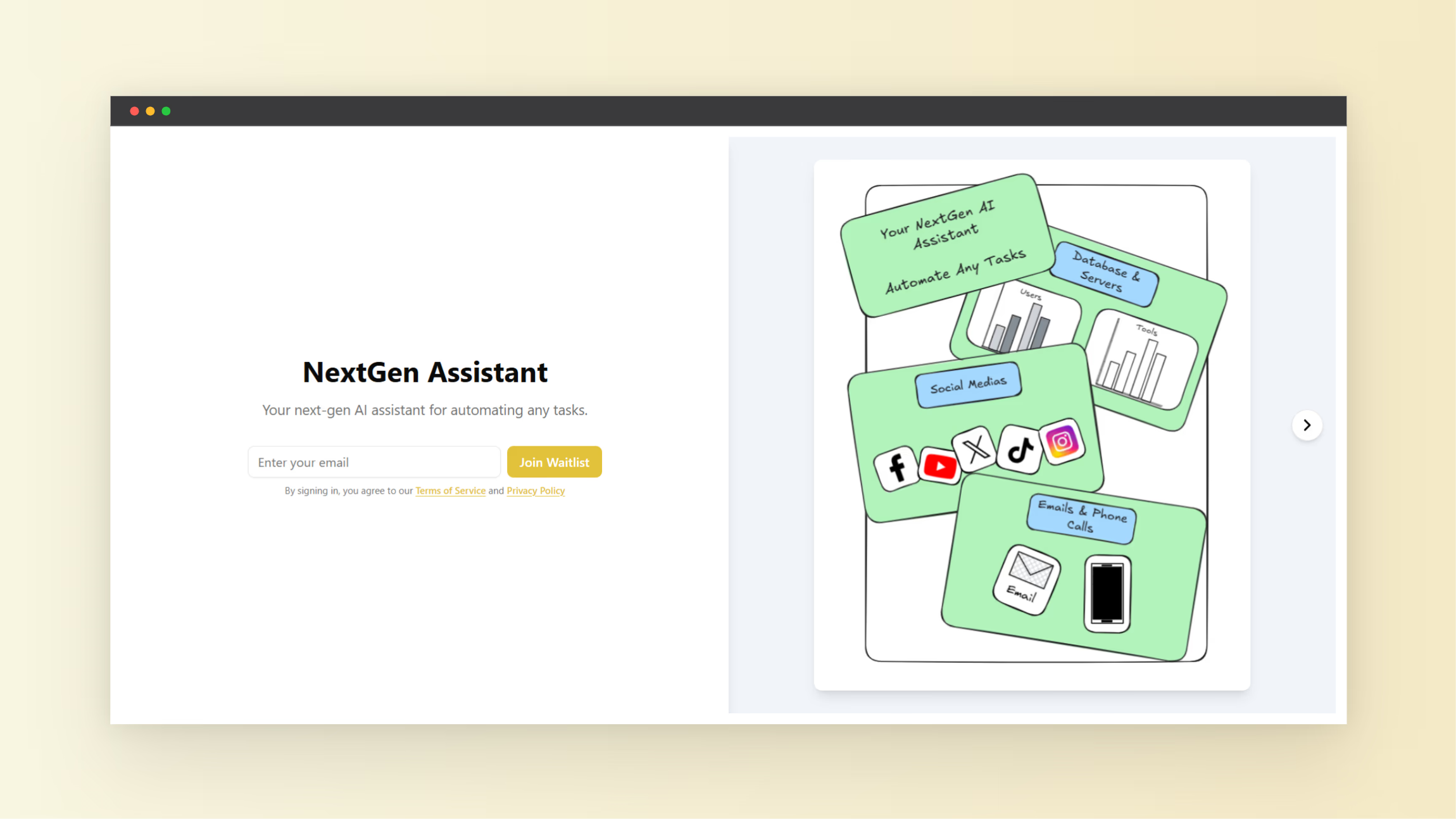
Getting your first 100 signups before launch is less about “going viral” and more about running a focused, repeatable distribution plan. If you are searching for how to promote a waitlist and get your first 100 signups, you need three things working together: a clear promise, a simple waitlist experience, and a weekly cadence of outreach that compounds.
VIP List is built for this moment. Its tagline says it plainly: Build hype before you build. A waitlist is not just a form, it is a pre-launch marketing system that helps you validate demand, collect feedback, and create momentum you can convert into customers on day one.
This guide walks through a practical plan you can follow to promote your waitlist, earn trust quickly, and reliably reach your first 100 signups before launch.
What “100 signups” really means (and why it is the right first milestone)
The first 100 waitlist signups are valuable because they usually come from manual, deliberate promotion. That makes them high signal. You will learn what messaging lands, which channels produce real interest, and what objections keep showing up.
Before you chase bigger numbers, decide what kind of 100 you want:
- 100 ideal signups from your target audience (best for validation and early revenue).
- 100 curious signups from a broader audience (useful for awareness, but noisier feedback).
- 100 qualified signups that match firmographic or demographic criteria (best for B2B).
If your goal is to launch strong, aim for “ideal” or “qualified.” It will shape every decision you make in the rest of your waitlist promotion plan.
Start with positioning: one audience, one pain, one promise
If you want to know how to promote a waitlist and get your first 100 signups, the fastest shortcut is clarity. People do not join waitlists for products, they join for outcomes.
Write one sentence you can repeat everywhere:
- Audience: who it is for
- Pain: what frustrates them right now
- Promise: what changes after your product exists
Example framework: “For [audience] who struggle with [pain], [product] helps you [promise] without [common hassle].”
Then decide your waitlist angle. Your angle is why joining now matters:
- Early access
- Founding member pricing
- Limited seats
- Private beta
- Get input on the roadmap
When your positioning and angle are sharp, every promotional channel becomes easier because you are not improvising the story each time.
Build a waitlist page that converts (even with low traffic)
Promotion only works if the page is doing its job. A great waitlist page converts cold visitors, reduces anxiety, and makes sharing feel natural. Tools like VIP List help you set up a dedicated waitlist experience quickly so you can focus on distribution instead of wrestling with setup.
Use this conversion checklist:
- Headline: a clear outcome, not a vague slogan
- Subheadline: who it is for and what makes it different
- Three benefit bullets: specific and measurable where possible
- What happens next: “Join the waitlist” should clarify expectations
- Trust signals: your background, logos if relevant, or a short credibility line
- Friction reduction: ask for the minimum info (usually email, sometimes role)
- Share prompt: a simple nudge to invite a friend or teammate
Copy tip: write like you are answering a DM. If your page reads like a press release, it will usually underperform.
Create a simple incentive that does not cheapen your brand
Incentives can accelerate signups, but the wrong incentive attracts the wrong people. You want an offer that is aligned with your product value, not a random giveaway.
High-quality incentive ideas:
- Founding member pricing for the first 100 or first 250
- Priority onboarding or white-glove setup for early users
- Private group access (community, office hours, behind-the-scenes updates)
- Bonus features locked to early adopters
- Input on roadmap (vote on features, early testing)
Keep it simple. Your incentive should fit in one short sentence you can repeat in every post and message.
Design a referral loop to turn signups into more signups
The easiest way to compound growth is to make sharing part of the waitlist flow. A referral loop works when it is clear, immediate, and socially easy. VIP List is positioned around building hype, and referral-driven sharing is one of the cleanest ways to do that.
A practical referral loop for your first 100:
- Immediately after signup, show a thank-you message that explains the benefit of sharing.
- Give a reason to share, such as moving up the list or unlocking early access sooner.
- Make the share action obvious with a short message people can copy.
- Follow up within 24 hours with a welcome email and a reminder of the referral perk.
Referral rewards that work well early:
- Move up in line
- Unlock an earlier invite wave
- Access to a private demo session
- Founding member badge or plan perk
Even if only 10 to 20 percent share, the compounding effect can materially shorten the time to your first 100 signups.
Pick 3 channels, not 13 (and commit for two weeks)
Most founders fail at waitlist promotion because they change channels too fast. The fix is to choose three channels that match your audience, then run a tight two-week sprint.
Choose from these channel families:
- Direct outreach: DMs, emails, personal network, warm intros
- Communities: Slack groups, Discords, forums, niche groups
- Content: short posts, threads, videos, newsletters, podcasts
- Partnerships: creators, micro-influencers, complementary tools
- Paid: small-budget tests once your page converts
For your first 100, direct outreach plus one community plus one content channel is usually the fastest combination.
Direct outreach script: the fastest path to your first 25 signups
If you want to learn how to promote a waitlist and get your first 100 signups before launch, start with direct outreach. It is unscalable, but it is decisive. The goal is not to spam, it is to invite the right people into an early circle.
Use this simple message structure:
- Context: why you are reaching out to them specifically
- Problem: the pain you believe they have
- Promise: what you are building to solve it
- Ask: join the waitlist (and optionally one question)
Example (edit to your product):
“Hey [Name], I remember you mentioned [problem]. I’m building something for [audience] to help [promise]. We’re opening a small early-access group soon. Want me to add you to the VIP list? If yes, what is the one feature that would make it a no-brainer for you?”
Send 10 to 20 messages per day for five days. Track replies, objections, and the words people use. Then update your waitlist page copy to match reality.
Community posting that does not get ignored
Communities can drive high-intent signups if you show up as a contributor, not a drive-by promoter. The best community post is educational first, with a small invitation at the end.
Community post template:
- Share a short lesson you learned while building (mistake, insight, or framework).
- Show who it helps and what result it creates.
- Invite feedback with one specific question.
- Mention you opened a small waitlist for people who want early access.
What to avoid:
- Vague hype with no details
- Posting without reading the rules
- Dropping a link with no context
Since your blog content should not include links, the practical approach is to point people to “your VIP List waitlist page” in real usage, but keep the actual link in your community post outside this article.
Content that attracts the right signups (without a big audience)
You do not need a large following to get your first 100 signups. You need the right topic and a clear call to action. Think of content as “public problem solving” for your target customer.
Three content angles that convert well to waitlists:
- Before/after: “How I went from X to Y” (show a process)
- Behind the scenes: build-in-public updates with real learnings
- Teardown: analyze common mistakes in your niche and how to fix them
Make each piece end with a single action: join the waitlist for early access and updates. Consistency beats volume. One strong post per week plus daily short updates can be enough to create momentum.
Run a “first 100” campaign with a clear timeline
People act faster when there is a time window. You can create urgency ethically by running a short campaign with a defined end date and benefit.
Example 14-day campaign:
- Days 1 to 3: announce the problem and your angle, invite early supporters
- Days 4 to 7: share two customer stories or scenarios, ask for feedback
- Days 8 to 10: reveal a preview (screens, workflow, or demo snippet)
- Days 11 to 14: highlight the incentive, remind about the deadline, share progress
Progress updates matter. “We’re at 37 out of 100” is simple social proof and a reason to share.
Turn your waitlist into a relationship, not a number
A waitlist that converts into customers is a waitlist that communicates. Even a lightweight email cadence builds trust and reduces churn at launch.
What to send to your VIP list:
- Welcome email: confirm they are in, set expectations
- One-question survey: learn their top priority and segment your list
- Build updates: small wins, lessons learned, what is coming next
- Invite waves: early access in batches so you can onboard well
Keep emails short, personal, and specific. If you do not have something meaningful to say, ask a meaningful question. That alone can drive replies, which is a strong buying signal.
Measure what matters: the 5 metrics that get you to 100 faster
You do not need a complex analytics stack to promote a waitlist effectively. You need visibility into what is working so you can double down.
Track these:
- Waitlist conversion rate: visitors to signups
- Channel mix: where signups are coming from (DMs, communities, content)
- Share rate: percent of signups that share
- Referral signups: signups driven by other signups
- Reply rate: how many people respond to your welcome email or survey
If conversion is low, improve the page and message. If conversion is high but traffic is low, do more outreach. If traffic is high but signups are low, fix the promise and the page.
Common mistakes that keep founders stuck under 100 signups
If you are doing “all the things” and still not moving, one of these is usually the issue:
- Too broad: the product is for everyone, so the message resonates with no one
- Too vague: the page describes features instead of outcomes
- No follow-up: people join, then hear nothing for weeks
- No reason to share: referral loop is missing or unclear
- Channel thrashing: switching strategies every two days
The fix is almost always the same: narrow your audience, sharpen your promise, and run a two-week promotion sprint with consistent messaging.
A practical weekly plan to get your first 100 waitlist signups
Here is a repeatable schedule you can use until you hit 100. It is designed to be realistic for solo founders and small teams.
- Monday: publish one “anchor” post (lesson, teardown, or behind-the-scenes) and invite early access
- Tuesday: send 15 targeted DMs or emails, personalize the first line
- Wednesday: post in one relevant community with an educational angle
- Thursday: follow up with anyone who replied, ask one question, invite to join
- Friday: share a progress update and a small preview, remind about the waitlist
Repeat for two weeks, then review your metrics and rewrite your headline and outreach script based on what you learned.
How VIP List fits into the process
VIP List is a straightforward way to operationalize the core job of a pre-launch waitlist: capture interest, build hype, and keep momentum going while you build. Instead of stitching together a form, a page, and a manual tracking process, you set up a dedicated VIP list experience and focus on promotion.
Use VIP List as the central hub for:
- Collecting signups with a clean waitlist flow
- Creating a consistent message you can reuse across channels
- Encouraging sharing so early interest can compound
- Communicating updates so your list stays warm until launch
The tool is not the strategy, but the right tool reduces friction so the strategy actually gets executed.
Final checklist: if you do these 10 things, you will reach 100
If you want a single punch list for how to promote a waitlist and get your first 100 signups, use this:
- Write a one-sentence positioning statement (audience, pain, promise).
- Create a waitlist page with one clear outcome-focused headline.
- Offer one aligned incentive (founding pricing, priority access, private beta).
- Add a share prompt and a simple referral reward.
- Send 50 to 100 personalized outreach messages over two weeks.
- Post weekly educational content with a single call to action.
- Participate in two relevant communities and post value-first updates.
- Email your waitlist at least once per week (update or question).
- Track conversion rate, channel mix, and share rate.
- Rewrite your headline and pitch using the exact words your audience uses.
Do not wait for the product to be perfect. Build hype before you build, earn your first 100 supporters, and let those conversations shape what you launch.