FishCare AI: A Smarter Way to Care for Your Aquarium
Keeping an aquarium looks simple from the outside: add water, choose some fish, feed them every day, and enjoy the view. In reality, successful fishkeeping involves many interconnected decisions. Aquarium owners need to think about tank size, water quality, temperature, feeding, filtration, fish compatibility, stocking levels, and species-specific care requirements.
For beginners, this can quickly become overwhelming. Even experienced fishkeepers frequently need to research unfamiliar species, investigate unusual behavior, or double-check whether two fish can safely live together.
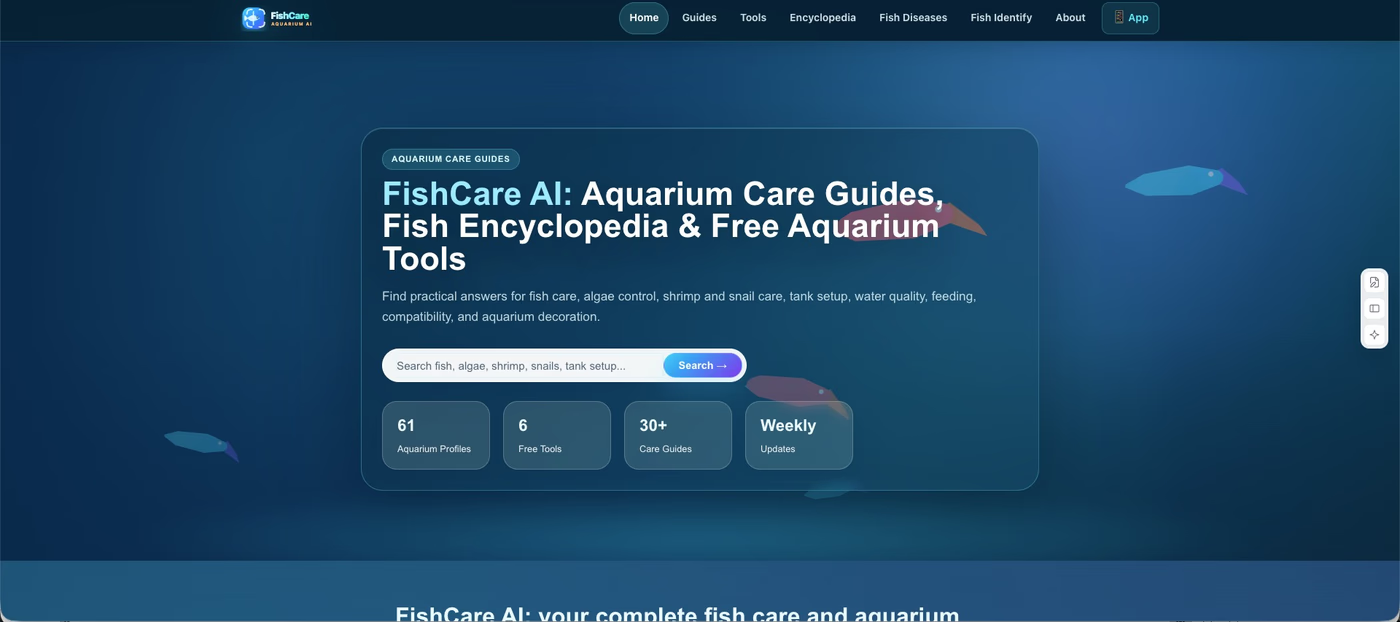
FishCare AI was created to make aquarium care information easier to access and use. It combines fish care guides, species information, aquarium calculators, compatibility resources, fish health information, and practical tools in one place.
Website:
Whether you are setting up your first aquarium or maintaining an established community tank, FishCare AI provides a useful starting point for making more informed fishkeeping decisions.
Why Aquarium Care Can Be Complicated
Every aquarium is a small ecosystem.
Fish are affected not only by food and water but also by temperature, pH, ammonia, nitrite, nitrate, hardness, filtration, tank size, social behavior, and the other species living around them.
This is why there is rarely a single answer that works for every aquarium.
A betta, for example, has different requirements from a goldfish. A discus aquarium needs different conditions from a typical guppy tank. Some species prefer living in groups, while others may become territorial when placed with similar fish.
Problems often begin when aquarium owners make decisions based only on appearance or general advice.
A fish may look small in a pet store but grow much larger as an adult. Two species may both be described as "community fish" while still having incompatible temperature requirements or very different activity levels.
FishCare AI helps organize this information so fishkeepers can research these factors before making important decisions.
Research Fish Species Before Adding Them to Your Tank
One of the best ways to prevent aquarium problems is to research a species before purchasing it.
FishCare AI provides species information and care resources covering many popular freshwater aquarium fish.
Instead of asking only, "Do I like this fish?", aquarium owners can investigate more useful questions:
How large does the fish become?
What tank size does it need?
What temperature range does it prefer?
What should it eat?
Is it peaceful or aggressive?
Should it be kept alone, in pairs, or in groups?
What fish can live with it?
What water conditions does it prefer?
These questions can make a major difference when planning an aquarium.
FishCare AI includes information about popular aquarium species such as bettas, guppies, mollies, goldfish, angelfish, discus, corydoras, tetras, gouramis, loaches, cichlids, plecos, shrimp, and many others.
This species-first approach is particularly useful for beginners who may not yet know which characteristics are important when selecting fish.
Aquarium Calculators Make Planning Easier
Aquarium care involves more calculations than many new fishkeepers expect.
You may need to estimate aquarium volume, determine an appropriate tank size, calculate feeding amounts, evaluate water parameters, or work out how much substrate is required for the bottom of a tank.
FishCare AI provides practical aquarium tools designed to make these tasks easier.
Instead of manually searching for formulas or trying to interpret multiple charts, users can enter information about their aquarium and receive results that are easier to understand.
This makes FishCare AI more than a collection of traditional blog articles. It also functions as a practical toolkit that aquarium owners can return to when planning or maintaining their tanks.
Choose the Right Tank Size
Tank size is one of the most important factors in aquarium planning.
A common beginner mistake is choosing an aquarium based primarily on how much physical space is available at home. However, the tank must also be suitable for the fish that will live inside it.
Fish need enough room to swim, establish territories, and display normal behavior. Larger aquariums can also provide more stable water conditions because changes in waste concentration and water chemistry may happen less rapidly than in very small volumes of water.
FishCare AI's tank-related resources help aquarium owners think about tank size based on their intended livestock and setup rather than treating every aquarium in the same way.
This is useful when planning a new aquarium or evaluating whether an existing tank is appropriate for a particular species.
Check Fish Compatibility Before Adding Tank Mates
Fish compatibility is one of the most common questions in the aquarium hobby.
"Can bettas live with guppies?"
"Can angelfish live with tetras?"
"Can shrimp live with betta fish?"
"Can discus and goldfish live together?"
These questions may sound simple, but compatibility depends on multiple factors.
Temperament matters, but it is not the only consideration. Aquarium owners also need to compare temperature preferences, water parameters, adult size, swimming behavior, diet, territorial tendencies, and minimum tank requirements.
FishCare AI provides compatibility information that helps users evaluate potential tank mates before putting them together.
This can reduce the risk of preventable problems such as aggression, fin nipping, predation, chronic stress, competition for food, or incompatible environmental requirements.
Checking compatibility before purchasing fish is almost always easier than trying to solve compatibility problems after the fish are already sharing an aquarium.
Understand Aquarium Water Parameters
Good water quality is fundamental to healthy fish.
Even an aquarium that looks clean can have water-quality problems that are invisible to the human eye.
Important parameters can include temperature, pH, ammonia, nitrite, nitrate, general hardness, and carbonate hardness. The ideal ranges vary depending on the species being kept.
FishCare AI provides resources that help fishkeepers better understand these measurements and evaluate aquarium conditions.
This is particularly useful when troubleshooting unusual behavior.
If a fish suddenly stops eating, spends more time near the surface, hides continuously, loses color, or becomes unusually inactive, the problem may not immediately be obvious.
Checking the aquarium environment—including water parameters—is often an important part of investigating what has changed.
Rather than treating every unusual symptom as a disease, aquarium owners should consider the entire environment in which the fish lives.
Get Help Understanding Fish Health Problems
Fish cannot tell us when something feels wrong.
Aquarium owners therefore have to observe physical appearance and behavior.
Common warning signs may include loss of appetite, bloating, white spots, unusual swimming, rapid breathing, damaged fins, color changes, rubbing against objects, hiding, or spending excessive time near the bottom or surface of the aquarium.
FishCare AI includes fish health information designed to help aquarium owners understand possible causes behind common symptoms and problems.
The goal is not to replace professional veterinary advice. Serious, persistent, or unexplained health problems may require help from a qualified aquatic veterinarian.
However, structured information can help fishkeepers know what to investigate first.
For example, an unusual behavior could potentially be connected to water quality, stress, aggression, diet, temperature, disease, or another environmental factor.
Understanding these possibilities can lead to more informed troubleshooting.
Improve Feeding Decisions
Feeding seems like one of the easiest parts of keeping fish, but it is also an area where beginners frequently make mistakes.
Overfeeding can contribute to poor water quality because uneaten food and excess waste increase the organic load in the aquarium. Underfeeding or providing an unsuitable diet can create other health and nutrition problems.
Different fish also have different dietary needs.
Some species are primarily herbivorous, some are carnivorous, and many common aquarium fish are omnivorous. Certain species feed near the surface, while others prefer food that sinks toward the bottom.
FishCare AI provides feeding-related resources to help users think about the amount and type of food they provide.
This encourages aquarium owners to move beyond a simple "feed once or twice per day" rule and consider the needs of the actual species in their tank.
Identify Unknown Fish
Sometimes aquarium owners encounter an even more basic problem: they do not know what fish they have.
This can happen when a fish is received as a gift, purchased under an incorrect store label, inherited with an aquarium, or seen without clear identification.
Correct identification matters because care requirements depend heavily on the species.
FishCare AI includes fish identification functionality designed to help users explore possible species and then continue researching their care requirements.
Once a fish has been identified, an aquarium owner can investigate its adult size, tank requirements, preferred water conditions, diet, behavior, and compatible tank mates.
This creates a logical process from identification to actual care.
Useful for New Aquarium Owners
Beginners often encounter conflicting aquarium advice online.
One forum post may recommend one tank size while another recommends something completely different. Social media comments may provide strong opinions without explaining the reasoning behind them.
FishCare AI provides a more structured starting point.
A beginner can use the website to research fish, understand basic care requirements, investigate compatibility, check water conditions, and learn about common aquarium problems.
Instead of learning everything at once, users can find information when they actually need it.
For someone setting up a first betta, guppy, goldfish, or community aquarium, this can make the learning process much more manageable.
Useful for Experienced Fishkeepers Too
FishCare AI is not limited to beginners.
Experienced aquarium owners frequently encounter unfamiliar situations when adding new species, changing aquarium setups, breeding fish, adjusting stocking levels, or troubleshooting health problems.
Calculators and structured reference information can save time even when someone already understands the fundamentals of fishkeeping.
The ability to move between species information, compatibility questions, aquarium planning, water parameters, feeding, and health topics makes the platform useful as an ongoing reference rather than something that is visited only once.
A More Practical Approach to Online Fish Care Information
One of the biggest challenges with aquarium information online is fragmentation.
Species profiles may exist on one website, compatibility charts on another, calculators somewhere else, and disease information across dozens of forum threads.
FishCare AI brings many of these tasks together.
An aquarium owner can start by researching a species, check whether it is suitable for a particular aquarium, investigate potential tank mates, review water requirements, and then access additional information about feeding or health.
That connected approach is particularly useful because aquarium care problems rarely exist in isolation.
Fish behavior is influenced by its environment, tank mates, diet, water conditions, and species-specific biology.
Looking at the aquarium as a complete system can therefore lead to better decisions than focusing on one factor alone.
Final Thoughts
Keeping fish successfully requires preparation, observation, and a willingness to learn.
There is no single formula for creating a perfect aquarium because every species and setup has different requirements. However, having reliable information and practical tools available can make many everyday decisions much easier.
FishCare AI aims to simplify that process by bringing fish species information, aquarium planning resources, compatibility guidance, calculators, water parameter information, feeding resources, fish identification, and fish health topics into one platform.
Whether you are researching your first fish, planning a community aquarium, checking whether two species can live together, investigating unusual behavior, or simply trying to improve your existing setup, FishCare AI is worth exploring.
You can visit FishCare AI here:
For aquarium owners who want a convenient place to research fish and make more informed care decisions, FishCare AI provides a growing collection of resources designed around real fishkeeping questions.